Insights & ideas.
Product updates, industry perspective, and the thinking behind the AI Operating System — written by the people building it.
More from the team
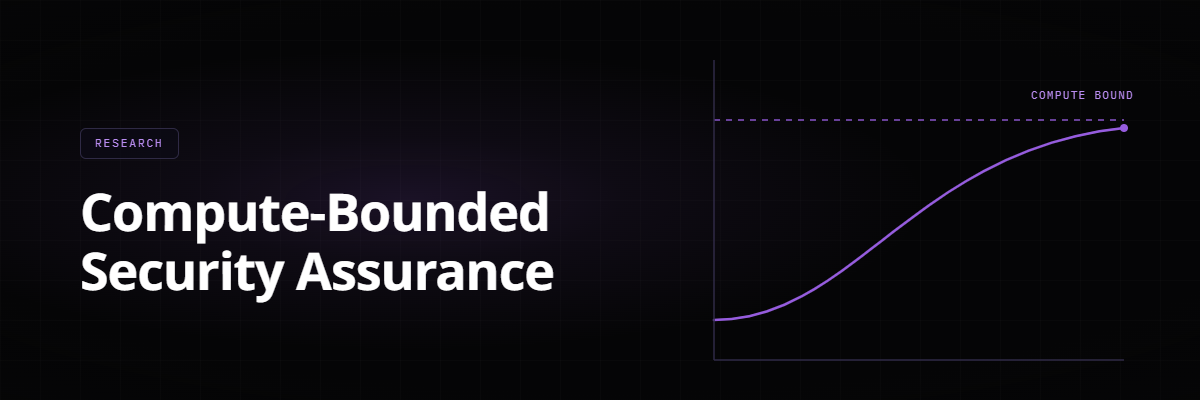
More Compute Is Not More Security: What It Actually Takes to Buy Assurance with AI
Repeated sampling raises the share of problems solved. It does not follow that harm goes down — a true ceiling comes only from problems that can never be solved, and no affordable test finds it.
Read the post
WaaV: An Open-Source Audio AI Gateway
Seventy providers, one interface, sub-millisecond overhead. A real-time voice gateway in Rust that replaces thirty SDKs with one WebSocket and one REST interface.
Read the post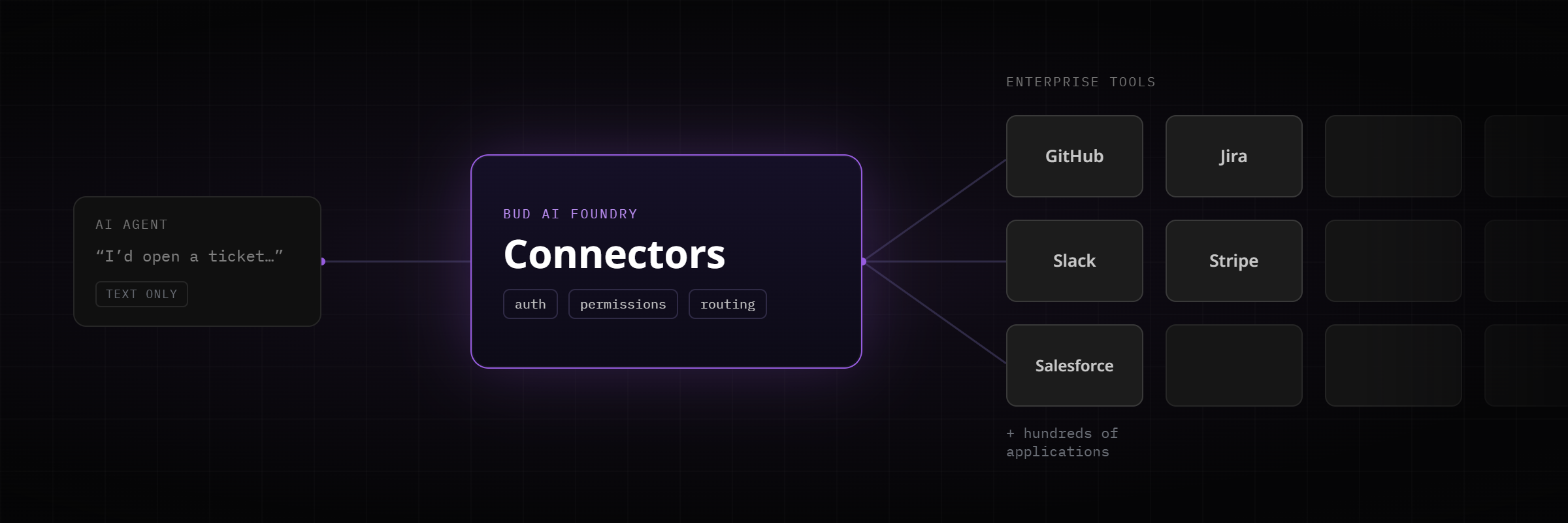
Connectors: One Governed Layer Between Your Agents and Every Tool
Connect once, use everywhere. A catalogue of pre-built MCP connectors, event triggers, custom REST tools, and one control plane with an on/off switch for every integration.
Read the post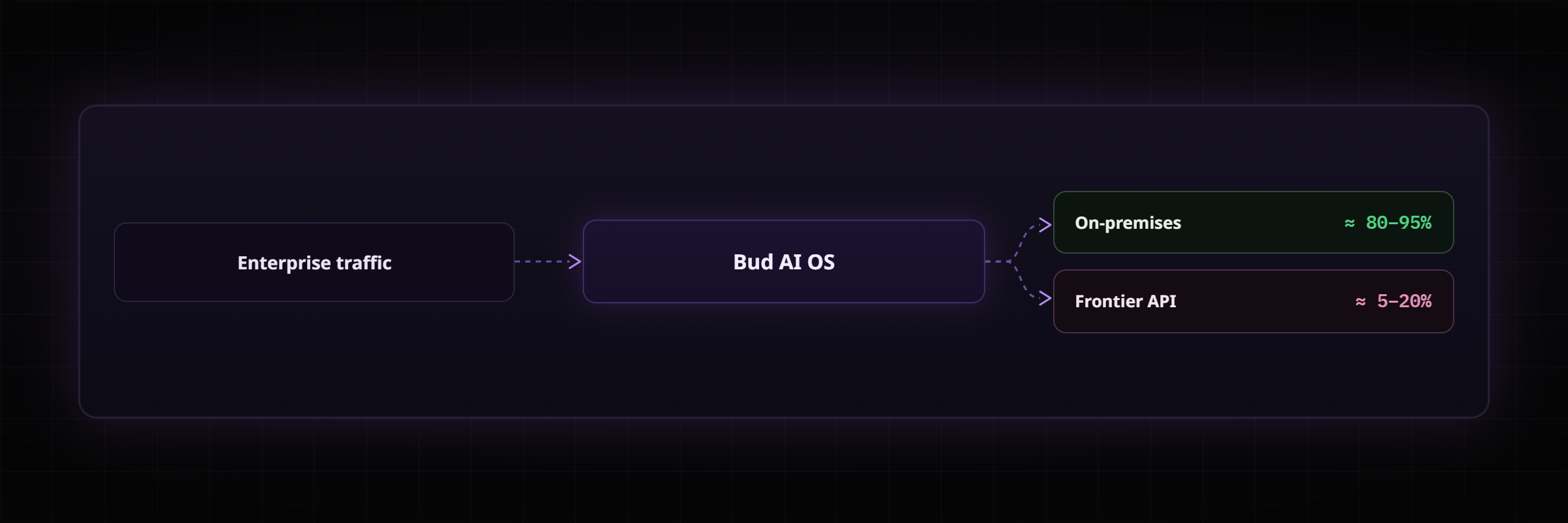
The Economics of Hybrid AI Deployment
A frontier API is a variable cost; a self-hosted node is a fixed one. They cross at about $135k a year — a line most deployments past a pilot have already crossed.
Read the post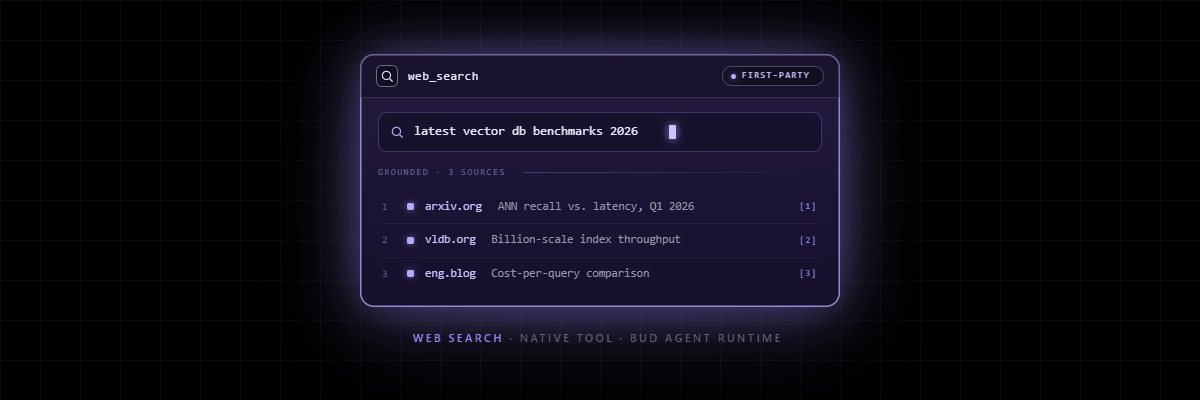
Understanding Native Tools in Bud Agent Builder: Web Search
Live web grounding as a first-party tool — no API keys, no per-query meter, and the whole grounding loop inside a platform you control.
Read the post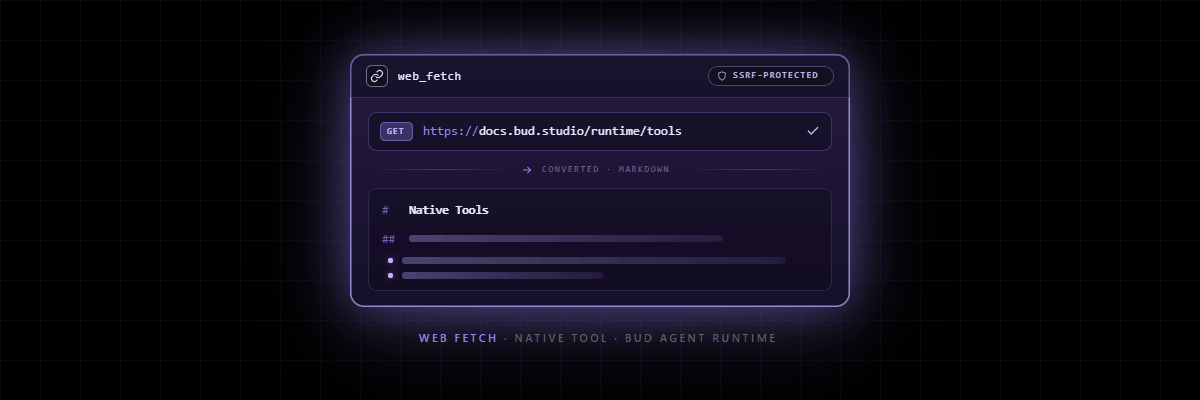
Understanding Native Tools in Bud Agent Builder: Web Fetch
Every platform can fetch a URL. Three things decide whether it survives a security review: where the fetch runs, what model it serves, and how it is governed.
Read the post
Understanding Native Tools in Bud Agent Builder: Code Interpreter
A real Jupyter and bash environment per agent, isolated in a Firecracker microVM with the network off by default.
Read the post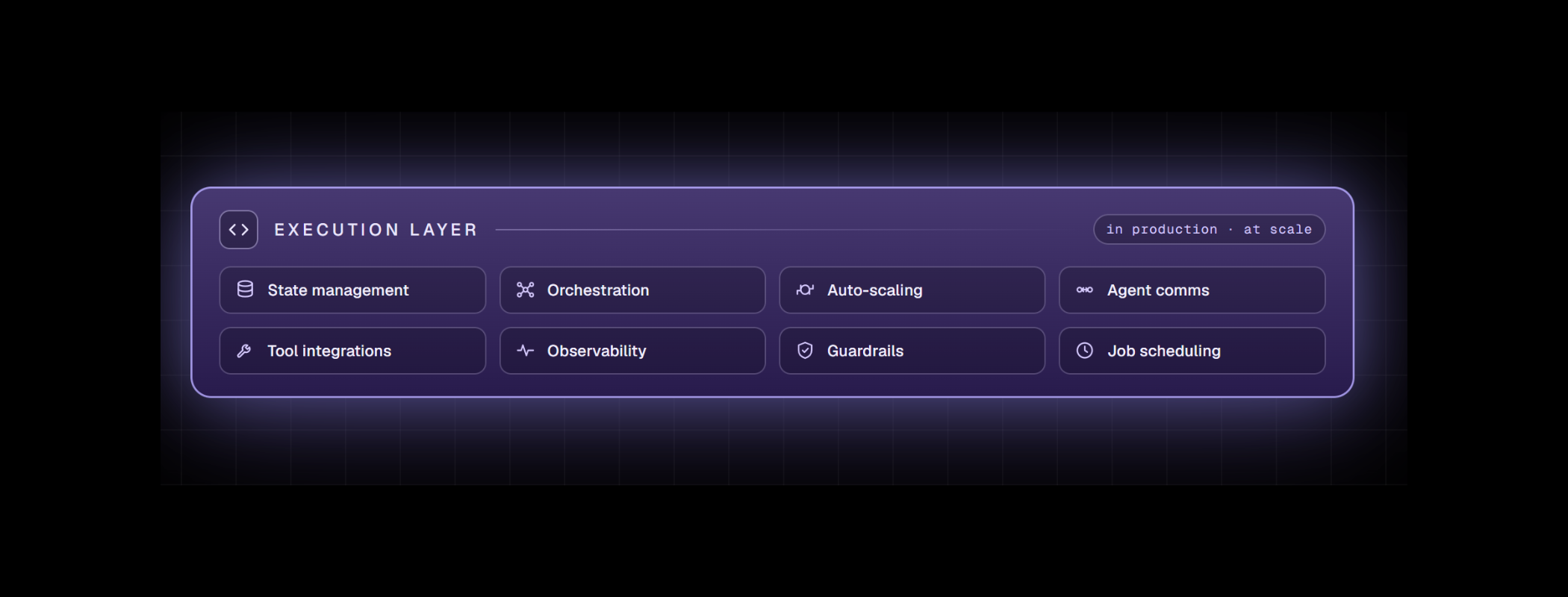
Bud Agent Runtime: The Execution Layer for Production-Grade Agentic Systems
The hard part of agentic AI was never the agent. It was durability, scale, security and visibility around it.
Read the post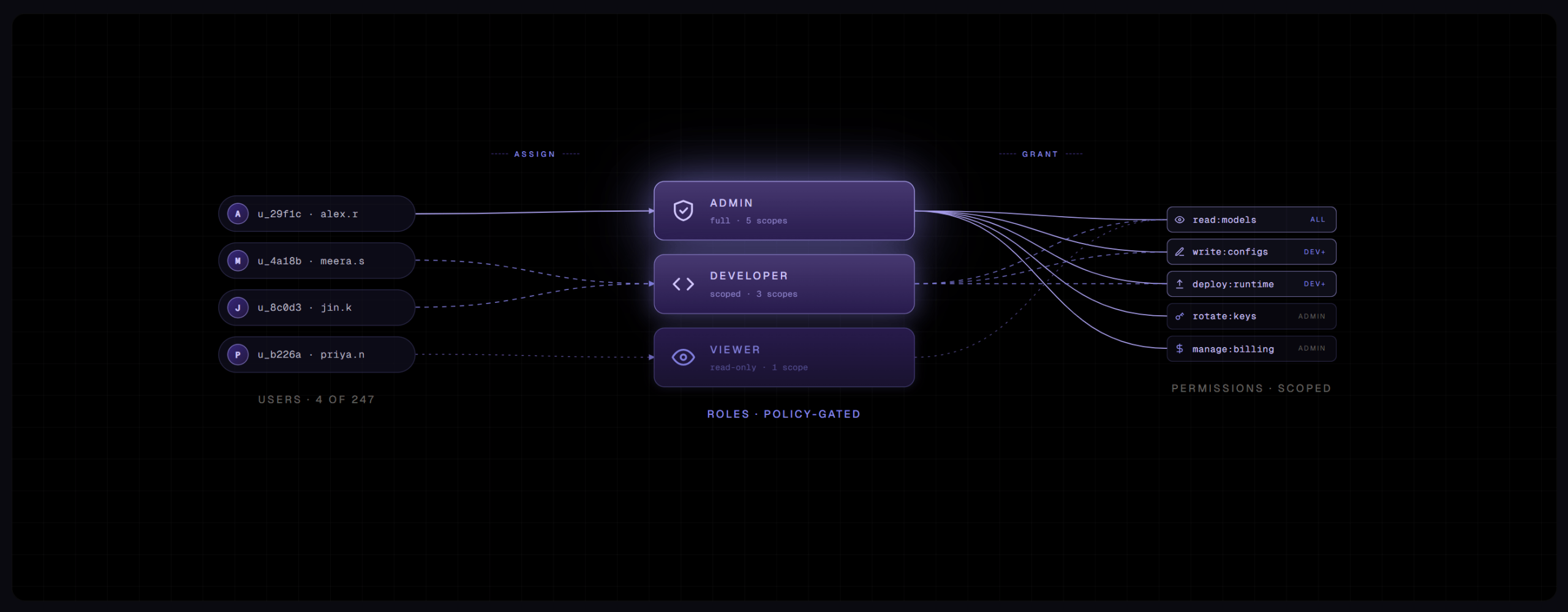
How We Designed User Access Controls in Bud Ecosystem, and Why
Projects as the grouping primitive, agents as a user type, and permissions in four dimensions instead of two.
Read the post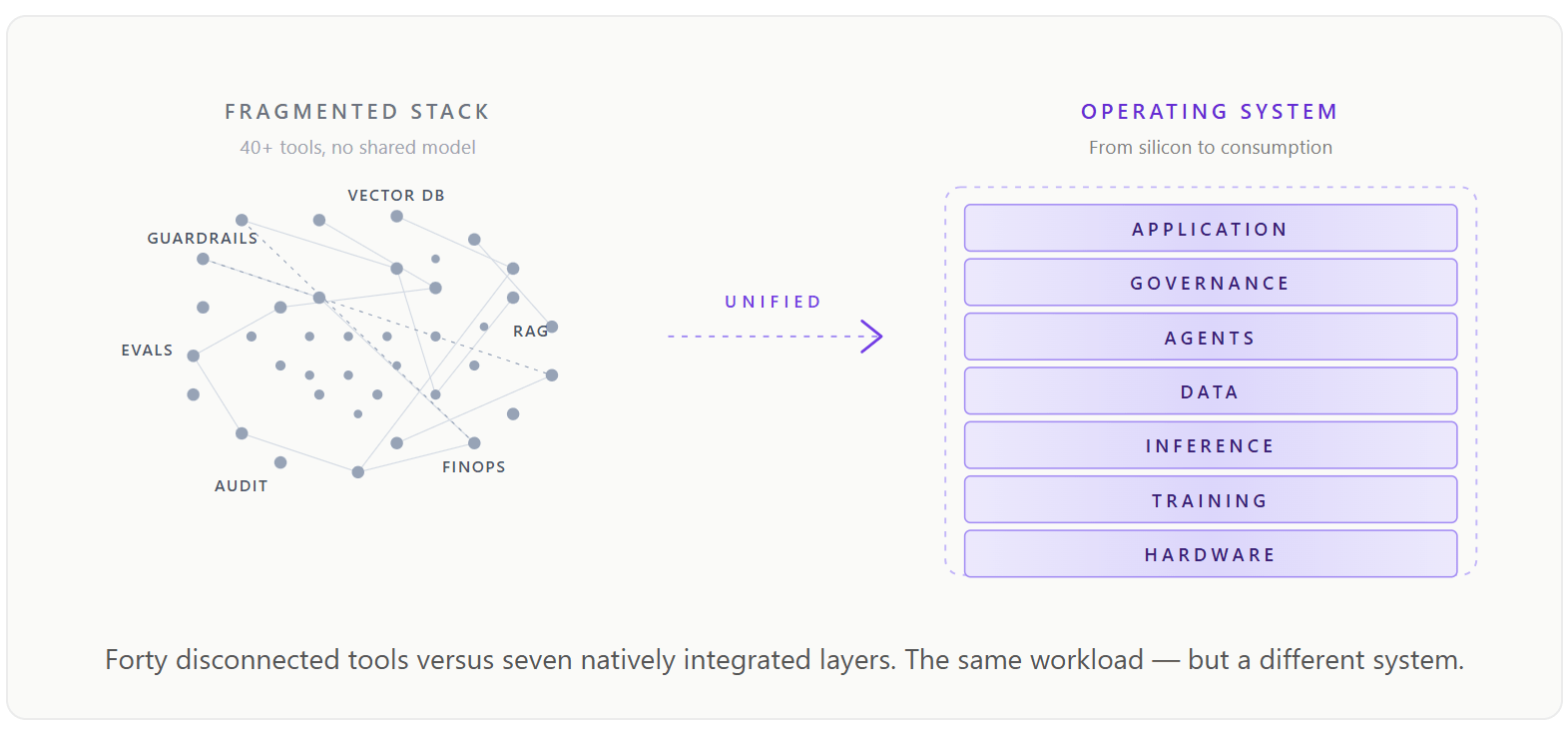
Why Enterprise AI Doesn't Need Another Tool — It Needs a Platform That Owns the Stack
The models work. What fails is everything around them: 40–56 tools, seven layers, five lifecycle phases, and nobody who owns the joins.
Read the post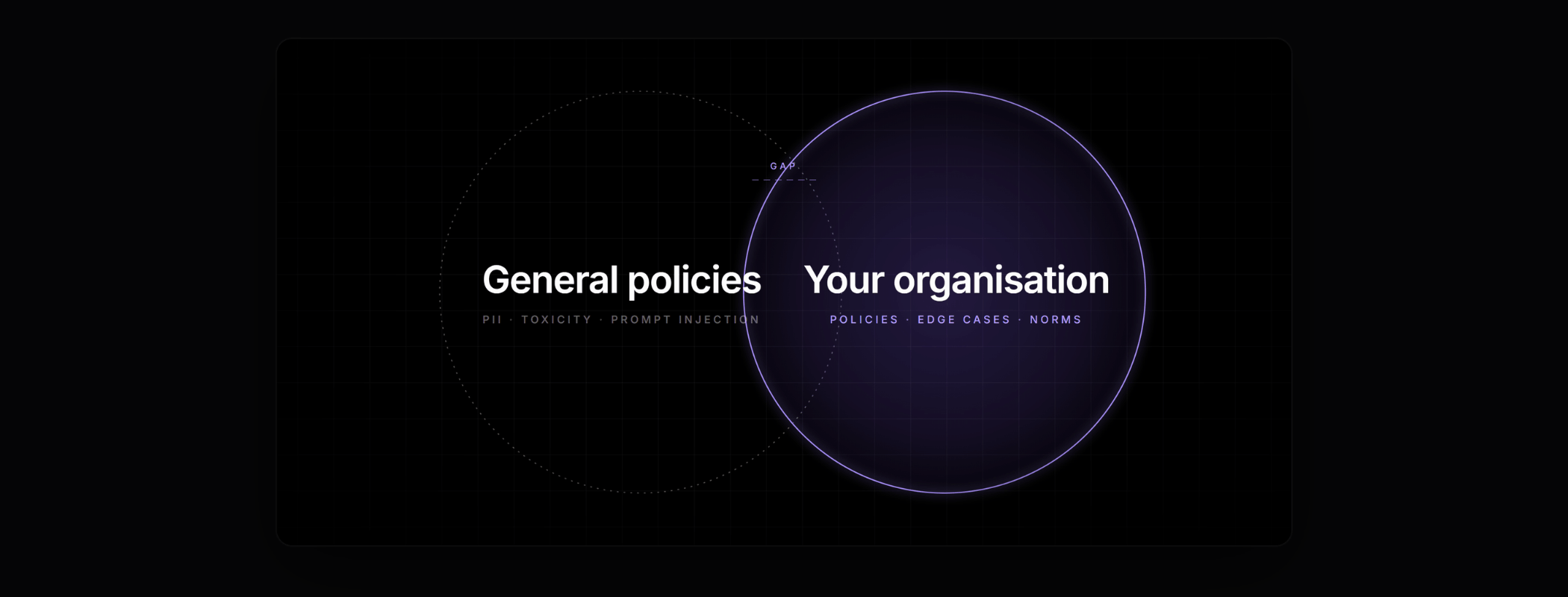
When Generic AI Safety Isn't Enough: Building Custom Guardrails That Fit Your Enterprise
A cost tax, a training tax and a time tax stand between you and a policy only your organisation can write.
Read the post
AI-Enabled vs. AI-Native: What's the Actual Difference?
88% of organizations run AI. 6% generate measurable EBIT from it. The gap between them is not the model — it is architecture, across six operational dimensions.
 Kevin Johnson
5 min
Kevin Johnson
5 min

Why Use FCSP if GPUs Already Support MIG?
MIG needs an A100 or H100, fixed profiles, and a GPU reset to resize. FCSP runs on any CUDA-capable card and resizes at runtime.
Read the post
How to Build vLLM Plugins: A Developer’s Guide
Five entry-point groups, a working plugin from scratch, and the errors you will hit on the way.
Read the post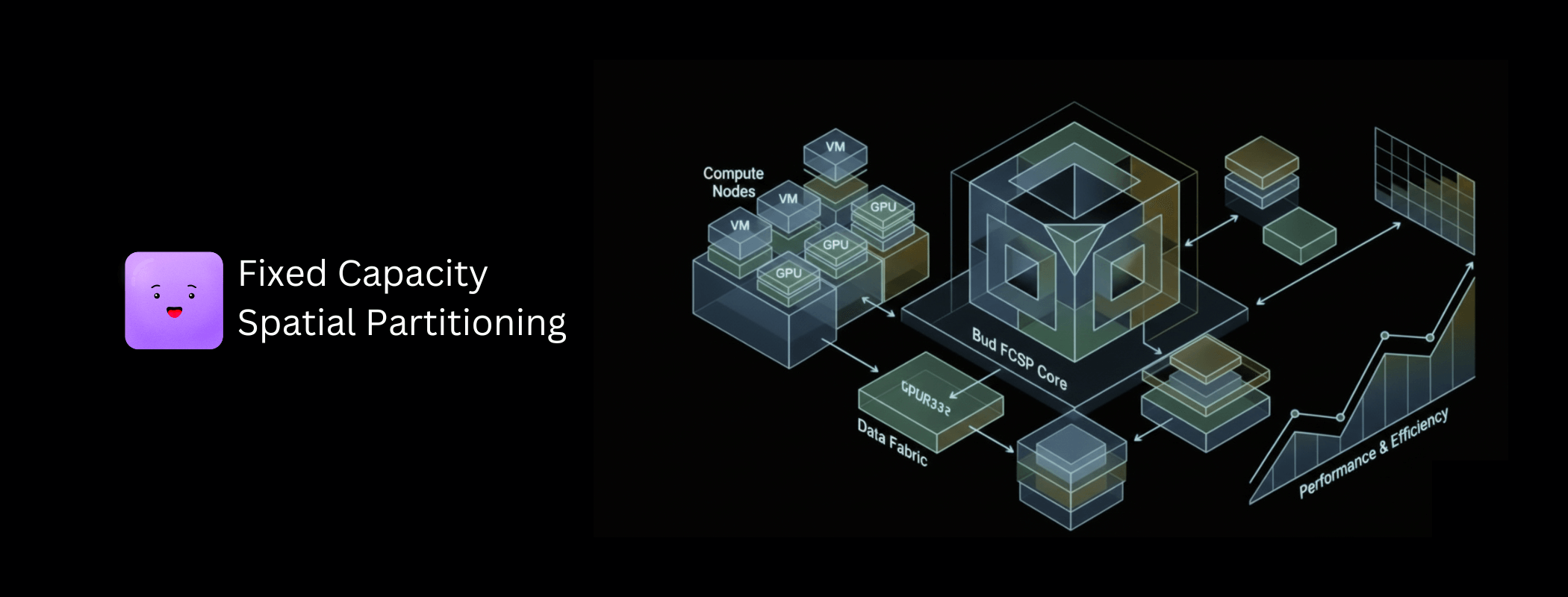
Fixed Capacity Spatial Partition: GPU Isolation for Multi-Tenant ML
A user-space GPU virtualization framework built on lock-free C11 atomics — sub-microsecond memory enforcement and no tail-latency spikes.
Read the post
Virtualised Hardware: The Missing Layer for AI-in-a-Box
These appliances rarely have a performance problem. They have a utilisation problem — and one box per feature is the symptom, not the cure.
Read the post
Introducing GPU-Virt-Bench
56 metrics across 10 categories, comparing native GPU, HAMi-core, BUD-FCSP and simulated MIG on the same hardware.
Read the post
Heterogeneous GPU Virtualisation in Bud AI Foundry
Clusters packed with A100s and H100s routinely run at a fraction of capacity. The problem is wastage, not performance.
Read the post
Reinventing Guardrails, Part 1: Why Performance, Latency and Safety Need a New Equation
Benchmarks report sub-100 ms at 512 tokens. Production runs at 4K–8K. The gap is where the latency hides.
Read the post
Beyond Hardware: How OEMs Move from Devices to AI-Native Systems
Devices are about to stop shipping without AI, the way they stopped shipping without an operating system.
Read the post
Beyond Bare Metal: How Cloud Providers Move to AI-First Services
Hyperscalers are not winning AI on raw compute. They are winning it on the foundry layer above it.
Read the post
NxtGen’s M for Coding, Powered by Bud
A coding assistant on NxtGen Cloud, running Bud’s models. 73.8 on SWE-bench Verified at 500 turns.
Read the post
A Case Against AI Wrappers and Proprietary API Models
Every wrapper interaction trains the model underneath it. Five reasons the layer does not survive the next release.
Read the post
We Just Released the World's Largest Open Dataset for AI Guardrails
4.5 million labelled samples across 26 harm categories, Apache-2.0, open for research and commercial use.
Read the post
From Pilot to Production: The Evals That Matter
Speed is the easiest thing to measure and the least likely to decide whether a system ships. What to measure instead.
Read the post
From Pilot to Production: Why 95% of AI Projects Fail
Building the agent is the easy part. Seven reasons pilots stall between the sandbox and production.
Read the post
I Built BlazeText: 6.6× the Tokenizer Throughput of HuggingFace
Tokenization was eating 90% of guardrail latency. 26,901 tokens a second against 4,077.
Read the post
Open Source Update: Bud Symbolic AI
Semantic phrase matching with intelligent boundaries and FAISS-backed lookup — the symbolic layer under Bud’s guardrail rules.
Read the post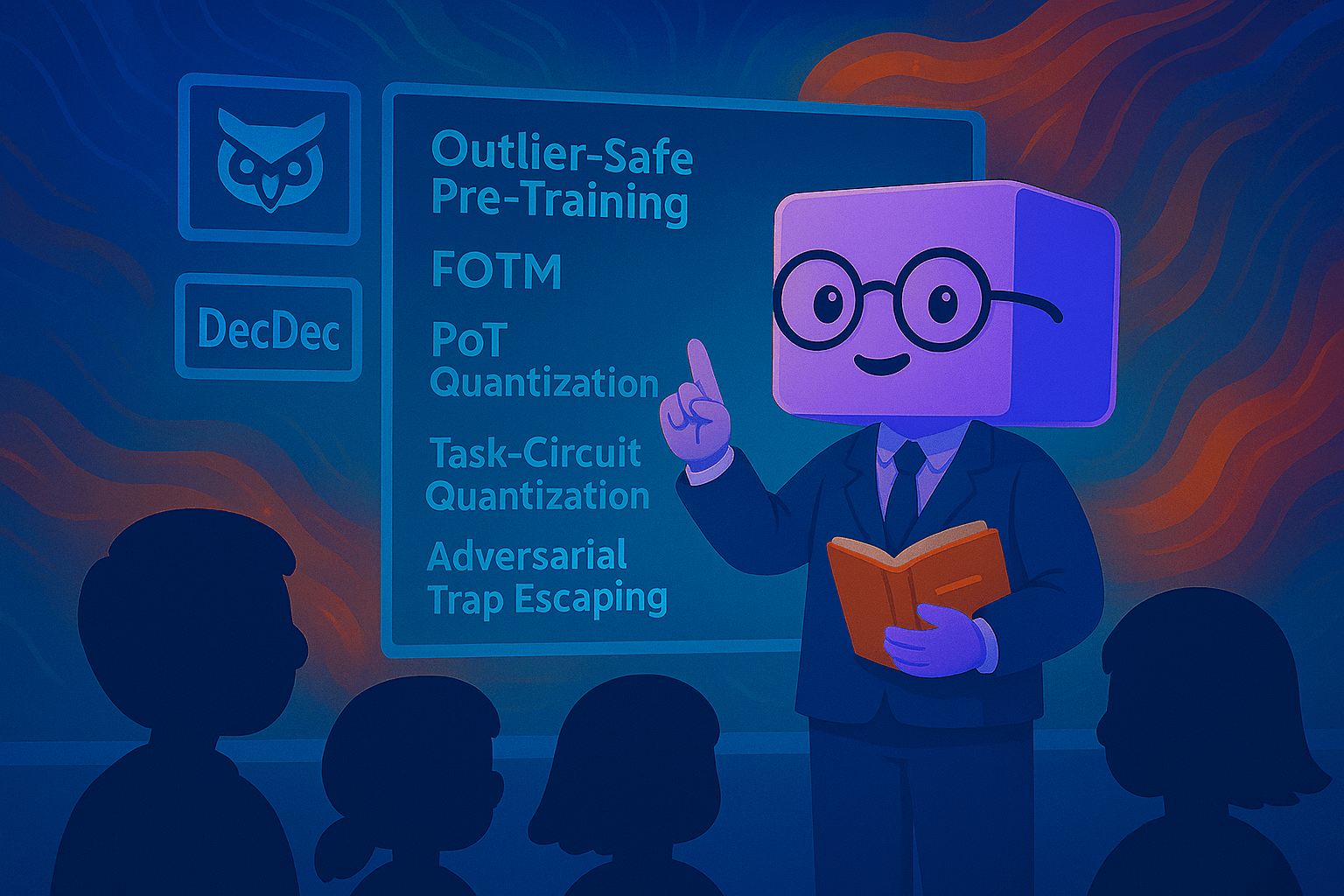
What’s New in LLM Inference Optimization
Quantization, pruning, distillation, KV caching, batching and speculative decoding — what moved, and what each one costs.
Read the post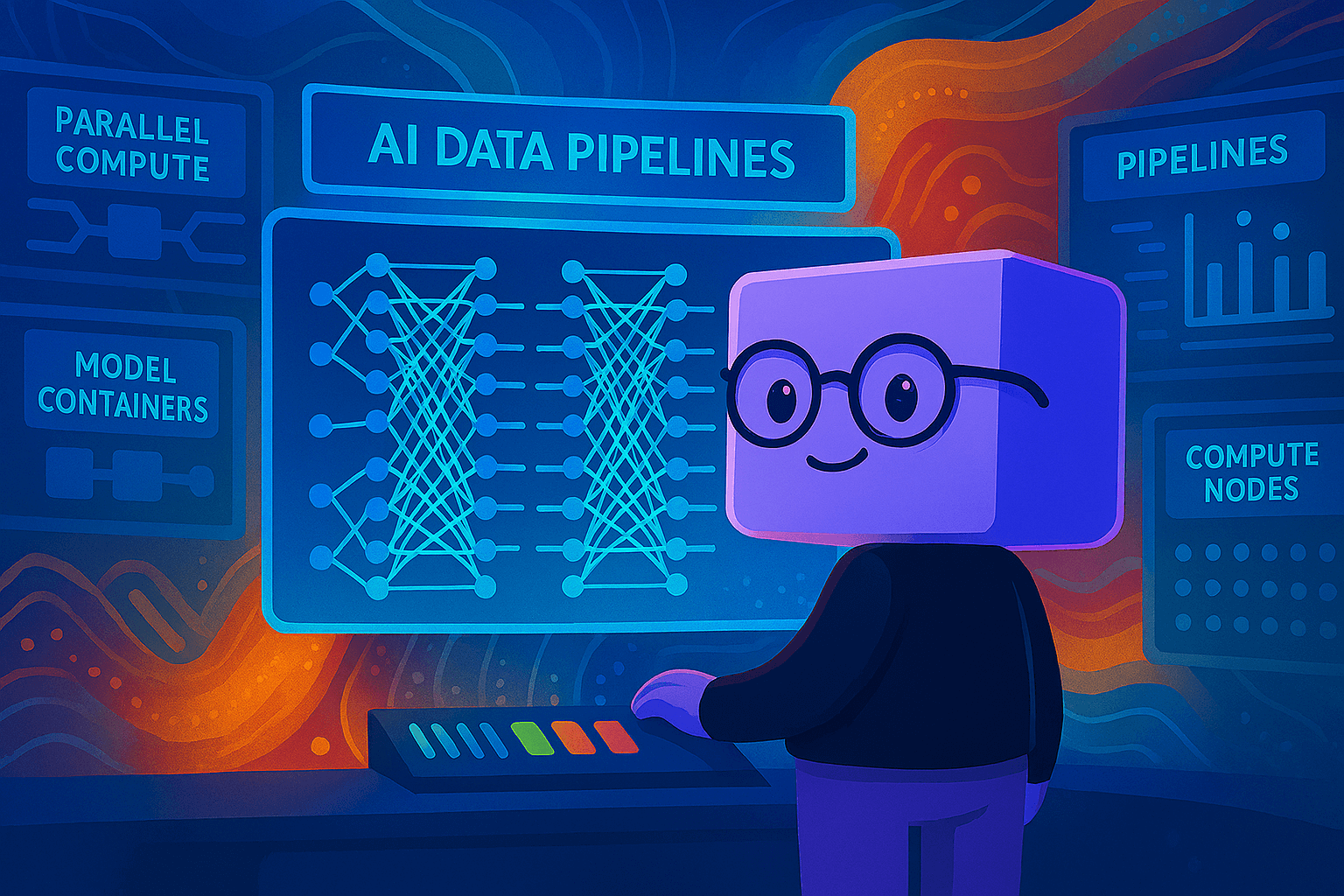
A Survey of Parallelism Strategies for AI Deployments
Data, model, tensor, pipeline, sequence and expert — what each one splits and where it breaks.
Read the post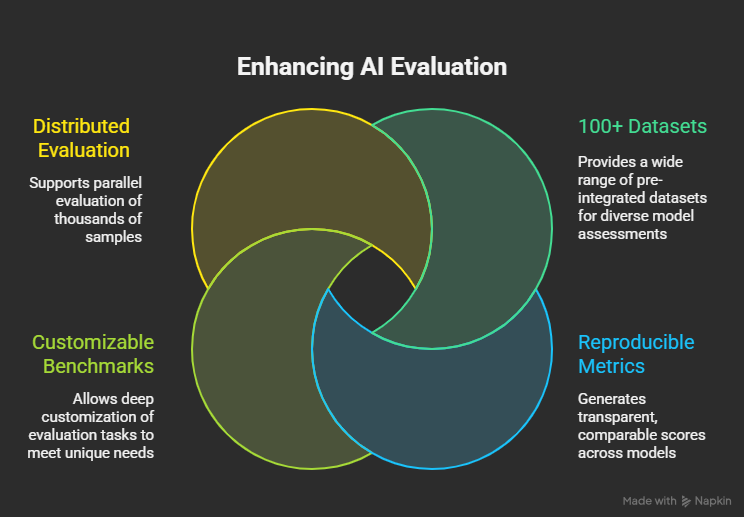
Product Update: Bud’s LLM Evaluation Framework 2.0
100+ pre-integrated datasets, reproducible cross-model scores, and evaluation across eight cognitive dimensions.
Read the post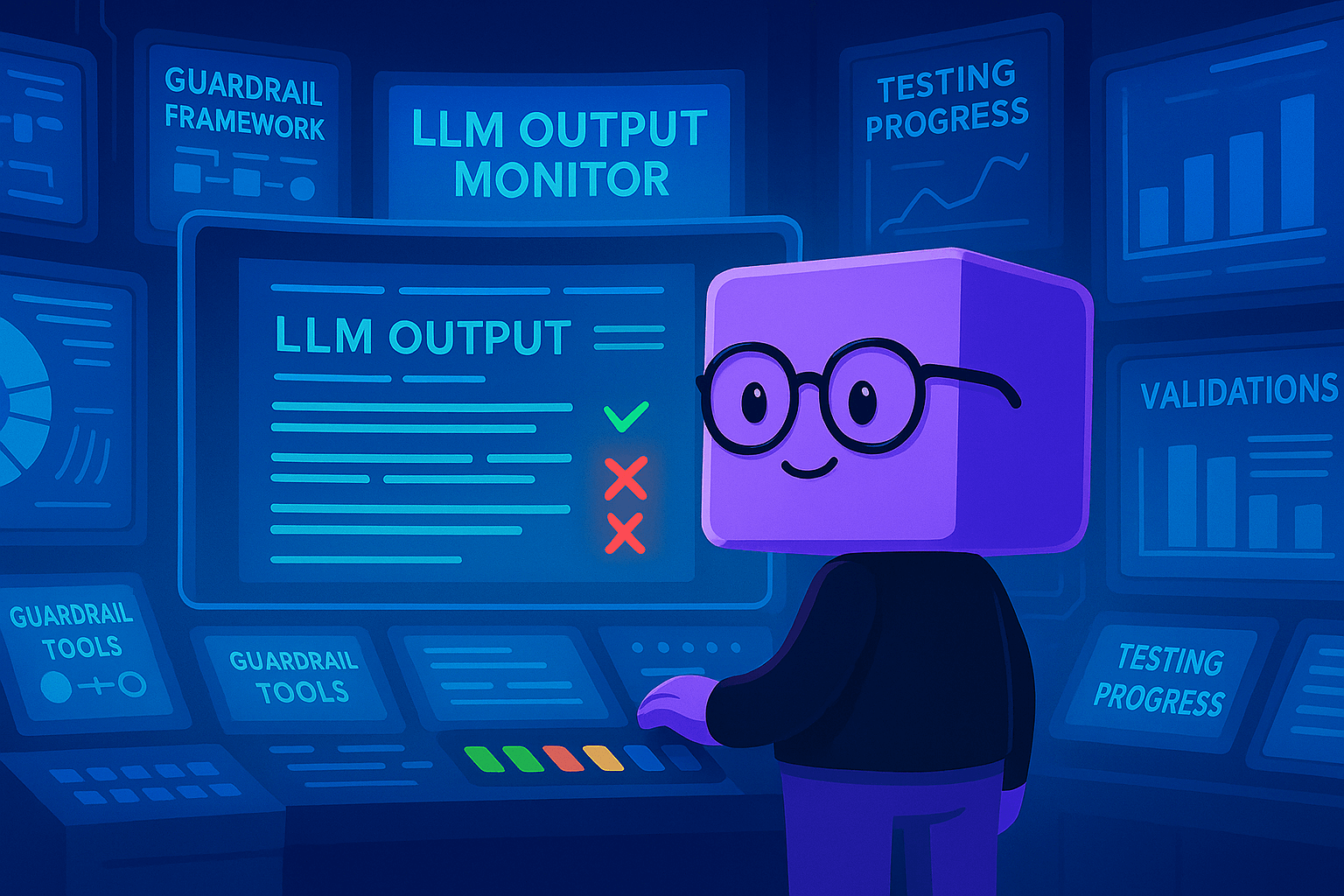
A Survey on LLM Guardrails, Part 2: Testing, Validation and Tooling
A guardrail you have not attacked is a guardrail you do not have. Datasets, metrics, and what a false positive costs.
Read the post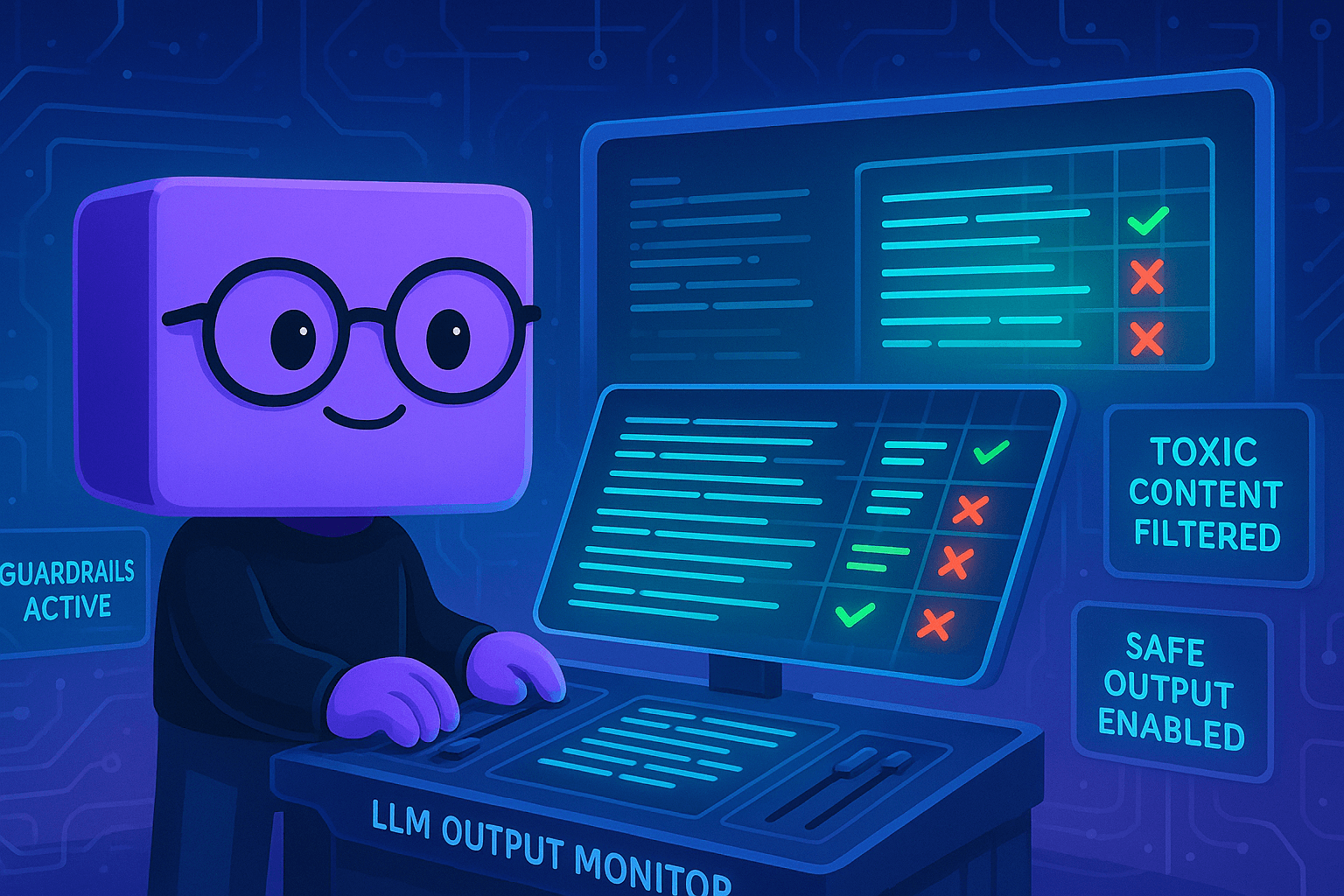
A Survey on LLM Guardrails, Part 1: Methods and Best Practices
Prompt-injection defence, output restriction, latency budgets, and what GDPR and HIPAA require of a guardrail layer.
Read the post
Sovereign AI Framework for Developing Nations
Full national control of the AI stack — compute, data, models and talent — and what dependency costs.
Read the post
Automating License Analysis: A Small Feature That Solves a Big Problem
Model licences vary by commercial use, redistribution and derivative works. Bud Runtime reads each one before you deploy.
Read the post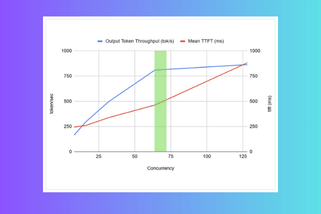
Why Over-Optimizing LLM Inference Is Costing You Money
Generating tokens faster than a person can read them is spend with no return. Find the green zone instead.
Read the post
Introducing Bud Agent: Automating AI Systems Management
Every layer of the stack automates something except the stack itself.
Read the post
Why You Should Choose On-Prem Over Cloud for AI
Latency, sovereignty and total cost of ownership, with breakeven points by enterprise size.
Read the post
Introducing Hex-1: A Fully Open-Source LLM for Indic Languages
Best-in-set MMLU across all five supported languages, under a licence that includes commercial use.
Read the post
Introducing Bud SENTRY: Secure Evaluation and Runtime Trust
Malicious weights have already shipped on public model hubs. A zero-trust ingestion path from download to inference.
Read the post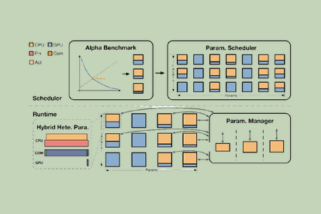
Optimising Cost Efficiency in LLM Serving with Heterogeneous Hardware
One GPU type for every request is the expensive default. Mélange holds 99.5% SLO adherence for less.
Read the post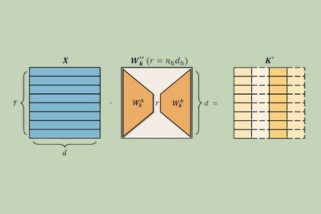
Exploring TransMLA for Cost-Effective Enterprise AI
Multi-head latent attention is what makes DeepSeek’s KV cache cheap. TransMLA converts an existing model to it.
Read the post
SLMs Fine-Tuned Like DeepSeek R1 + Bud Inference
DeepSeek showed reasoning can be distilled into a small model. Pair that with inference tuned to your own hardware.
Read the post
Introducing Maxwell TCS v0.2: Prompt Complexity Scoring
Routing a prompt to the right model needs a number for how hard it is. That is what Maxwell returns.
Read the post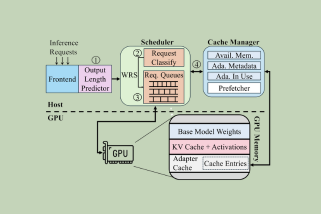
Chameleon: Adaptive Caching and Scheduling for Many-Adapter Inference
At adapter rank 128, 60% of time-to-first-token goes on the adapter, not the model.
Read the post
The Cost Conundrum, Part 1: The Goose Chase for Cost-Effective LLMs
The token-per-parameter ratio went from 20:1 to 215:1. Transformers still show no sign of convergence.
Read the post
How Enterprises Serious About ESG Should Approach AI
Task-specific small models emit a fraction of what general-purpose models do for the same job. The measured gap.
Read the post
x86 Is All You Need for AI Democratisation
The accelerator shortage is a distribution problem. Most inference fits on the CPUs you already own — 210 W against 2,910.
Read the post
Should You Replace Third-Party LLM Services with Open-Source SLMs?
Quality, latency and cost per 1,000 tokens, measured across a set of small models against GPT-4.
Read the post
An Equitable Governance Framework for AI Regulation
Regulating a model by its size measures the wrong thing. Score a release by its modelled impact instead.
Read the post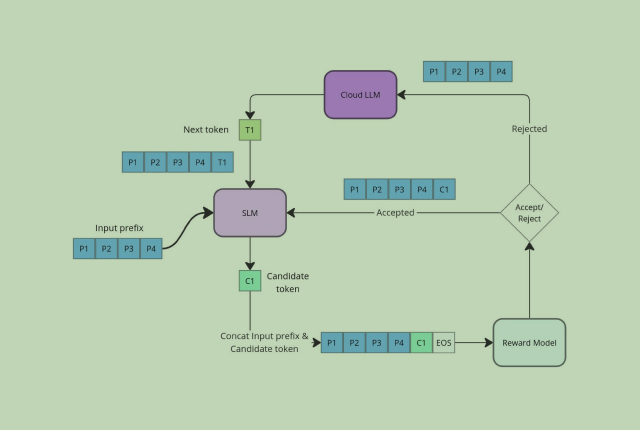
Reducing LLM Ops Costs with Hybrid Inference on Intel CPUs
A reward model decides which tokens need the cloud. At a threshold of 1, the LLM runs for 38.8% of them.
Read the post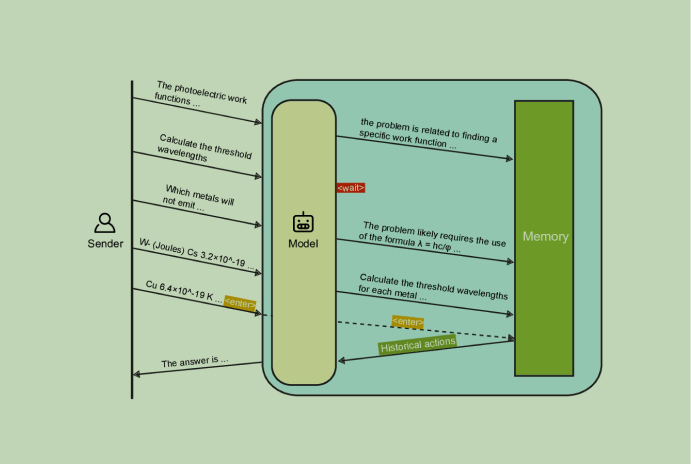
LiveMind: Low-Latency LLMs with Simultaneous Inference
Most of a model’s wait is spent watching a human type. Start reasoning before the prompt is finished.
Read the post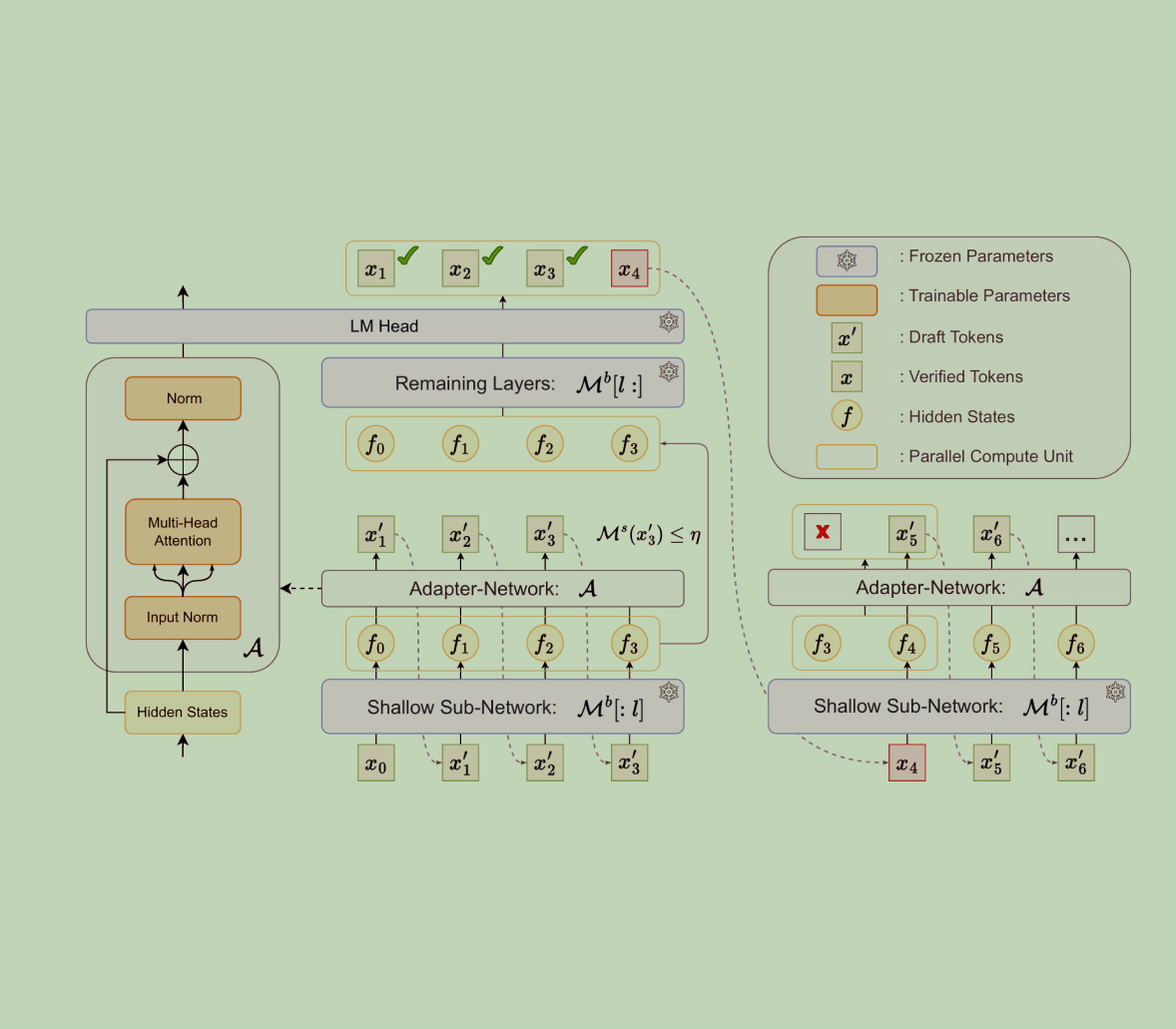
Kangaroo: Lossless Self-Speculative Decoding via Double Early Exiting
Speculative decoding without a second model — the draft comes from the target model’s own shallow layers.
Read the post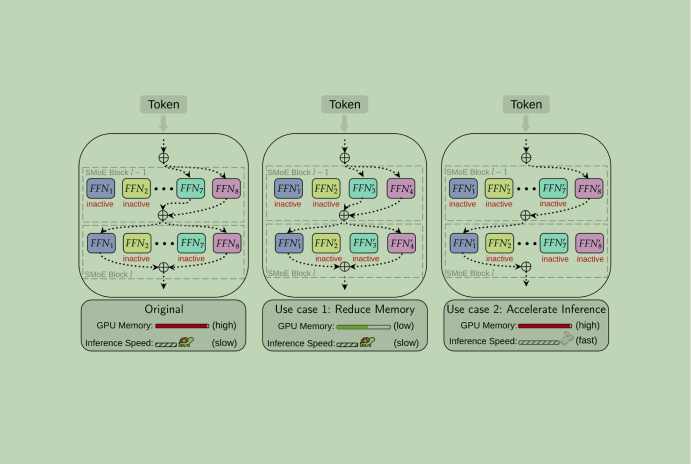
Efficient Expert Pruning for Sparse Mixture-of-Experts Models
A sparse MoE holds every expert in memory but activates a handful. Prune the ones that never earn their place.
Read the postNo posts in this category yet.
Put your data on it.
The fastest way to see what an integrated AI operating system does for your enterprise is a proof-of-concept on your infrastructure, with your data.