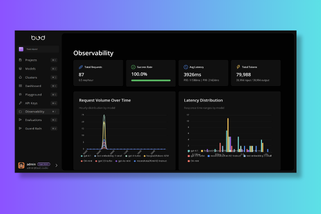
A GPU purchase addresses the AI accelerator requirement, but it does not address the business question. As soon as several teams or customers need that capacity in different forms, such as a bare-metal node for a training run, a Kubernetes cluster for a platform team, a SLURM queue for researchers or a serverless endpoint behind an inference product, the operator needs clean isolation, predictable placement and a charge that holds up in front of finance. That is the job of GPU management software. In 2026 it has become the layer that decides whether a GPU fleet earns a return or sits underutilized.
The market is moving quickly. Research and Markets projects GPU-as-a-Service revenue of $7.36 billion in 2026, rising to $26.43 billion by 2031. NVIDIA acquired SchedMD, the steward of Slurm, in December 2025, and released the full Run:ai platform as open source on October 13, 2026. [11] [12] Rafay, Mirantis, vCluster, Spectro Cloud and Armada are all competing to be the operator’s control plane. On October 22, we launched Bud GPU Foundry into that market: an Apache 2.0, open-source GPU-as-a-service control plane and, as important, the capacity layer of the full Bud Novaria AI OS suite. [1] [2]
This article looks at this category of software and how the leading options compare. In focus is why I believe Bud GPU Foundry, together with the full Bud Novaria AI OS stack that runs above it, is the stronger foundation for operators who want to sell more than GPU-hours.
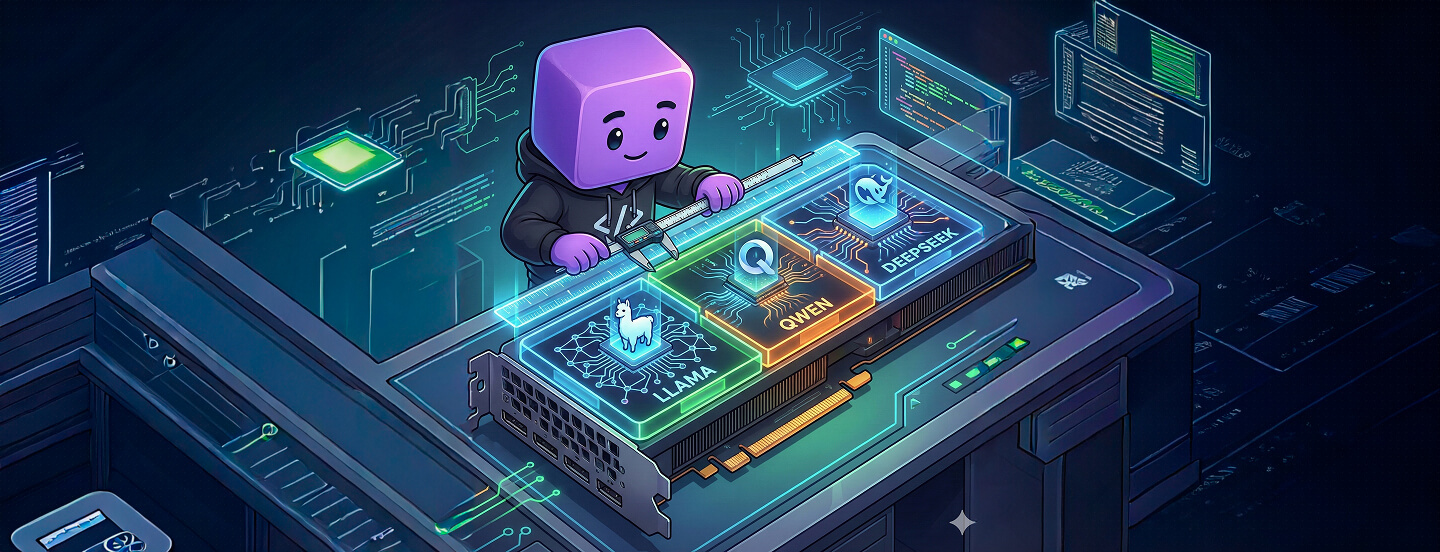
GPU management software, illustrated
Strip away the branding and every credible platform in this category is judged on six jobs:
- Provision. Discover, image, wipe and recycle physical hosts, and expose power and break-fix as API operations instead of tickets.
- Package. Turn raw capacity into sellable units (bare metal, virtual machines, Kubernetes, SLURM, serverless), each with a defined shape, price and boundary.
- Place. Schedule with awareness of GPU memory, NVLink and PCIe topology, CPU sockets and the network fabric, and start multi-node jobs all-or-nothing.
- Protect. Enforce a tenant boundary that matches what was sold: a whole node, a passed-through GPU, a hardware partition such as NVIDIA MIG, or a softer shared slice.
- Price. Meter what was actually delivered, rate it, and feed invoices, prepaid balances or internal chargeback without manual reconciliation.
- Operate. Run on-premises, hybrid, in sovereign domains or fully air-gapped; expose everything through APIs and infrastructure-as-code; and upgrade without disrupting tenants.
Scheduling alone is no longer a moat. The differences that matter sit in isolation, metering and operations, and in what the platform lets an operator sell above the GPU.
With Run:ai and its KAI Scheduler now open source, and NVIDIA committed to keeping Slurm open and vendor-neutral, good placement is becoming shared infrastructure. The competitive differences sit in the other jobs (isolation, metering, operations) and in what the platform lets an operator sell above the GPU.
The 2026 market landscape
Six platforms illustrate the range of approaches an operator will meet in an evaluation today:
| Platform | Approach | Accelerator scope | Commercial model | Notable 2026 moves |
|---|---|---|---|---|
| Bud GPU Foundry | Open control plane for GPU PaaS; stand-alone or as layer 02 of the Bud Novaria AI OS, with seven AI layers above | Hardware-agnostic: NVIDIA, AMD Instinct, Intel, Qualcomm and Huawei accelerators in one heterogeneous fleet | Apache 2.0; commercial offering with the Bud Novaria AI OS | Launched October 22 [1] [2] |
| Rafay Platform | Commercial GPU PaaS built on its Kubernetes management platform | NVIDIA Ampere, Hopper, Blackwell; AMD Instinct MI200/MI300; Intel Gaudi 3 | Proprietary subscription | Token Factory GA (Apr); NVIDIA AI Cloud-Ready (May); Cisco Solutions Plus (Jun) [13] [14] [16] |
| Mirantis k0rdent AI | Composable, Kubernetes-native “metal-to-model” stack across bare metal, VMs and Kubernetes | NVIDIA-validated; uses NVIDIA NCX Infra Controller | Open-source k0rdent core plus commercial offering | Founding NVIDIA AI Cloud Ready ISV (Mar); IREN agreed to acquire Mirantis for about $625M (May) [22] [23] |
| vCluster Platform | Virtual Kubernetes control plane per tenant, plus vMetal (bare metal) and vNode (workload isolation) | Hardware-agnostic | Per-node license; open-source vCluster core | vMetal launched at GTC (Mar); Run:ai conformant [24] |
| Spectro Cloud PaletteAI | Full-stack Kubernetes, VM, edge and AI infrastructure management | AMD and NVIDIA | Subscription by infrastructure under management | Series D above $100M (Jul) [25] |
| Armada Bridge | One control plane for IaaS, PaaS and AI-as-a-Service, including edge sites | Built around NVIDIA reference topologies | Priced on active GPU usage | Telecom and distributed “AI grid” focus [26] |
Table 1 — representative GPU management platforms, based on each vendor’s public materials as of October 2026
Two patterns stand out. First, most rivals build their story around NVIDIA reference designs and certification programs. That is a genuine advantage for an all-NVIDIA fleet, but less so for operators who expect to run AMD, Intel, Qualcomm or alternate accelerators alongside it. Second, most platforms stop at capacity, or at token metering just above it. A full AI and GPU-as-a-service offering needs an applications layer for training, data, tool integration, guardrails and agents under a single tenancy and audit model. Bud’s design targets that opportunity.
Rafay: the capable incumbent
The Rafay Platform gives cloud operators and enterprise platform teams self-service provisioning, multi-tenancy, policy, quotas, usage tracking and chargeback. It supports bare-metal, virtual-machine, Kubernetes and SLURM offerings as well as developer environments. Its published support matrix covers NVIDIA Ampere, Hopper and Blackwell GPUs, AMD Instinct MI200 and MI300 series, and Intel Gaudi 3, among others. One nuance: spatial partitioning is supported only on MIG-capable NVIDIA GPUs. [13]
Rafay’s Token Factory reached general availability in April, giving operators token-metered model endpoints with pricing, access controls and quotas; named customer deployments include Cassava Technologies, Firmus and Telus. [14] [15] [21] A Monetize360 integration handles contract terms, invoicing and revenue operations. [20] Rafay packages NVIDIA DSX OS components into its platform, delivers Run:ai as a self-service managed offering, and now supports the open-source Run:ai release. [17] [18] [19]
The Rafay platform is a proprietary commercial layer, with its value concentrated in capacity and token monetization rather than in the full model-to-agent lifecycle.
Bud GPU Foundry: one fleet, full AI services, one bill
Bud GPU Foundry is the software an operator uses to rent accelerators to many customers as governed services. It installs on the operator’s own hardware, pools NVIDIA, AMD, Intel, Qualcomm and Huawei accelerators of mixed vendors and generations into one fleet, and treats air-gapped deployment as a standard configuration in which no component needs the public internet. Its design rests on four commitments: one catalog, one permission model, one audit trail, and one bill.
Five service classes in one catalog
| Service class | What the tenant receives | Isolation | Metered on |
|---|---|---|---|
| Bare metal | A physical host running the tenant’s OS; power and break-fix as API calls; verified erasure on return | Sole occupancy | Node-hours |
| Virtual machines | Own kernel with hardware passthrough; console, snapshots and private images; topology-aware placement | No shared kernel | Allocation-seconds |
| Kubernetes | Conformant upstream cluster with a tenant-held control plane and accelerator node pools; just-in-time access, no standing kubeconfig | Dedicated control plane | Node-hours per cluster |
| SLURM | Login nodes, partitions, QoS and fair share; existing job scripts and module trees carry over | Per-tenant cluster | Node-hours |
| Serverless containers | Declare image, command and shape; scale to zero and wake on demand; manual stops are previewed | Per isolation grade | Allocation- and GPU-seconds, VRAM-GB-hours |
Table 2 — Bud GPU Foundry service classes, from the published product page [2]
Isolation that matches what was sold
Bud GPU Foundry publishes four isolation grades, from strongest to weakest: an entire bare-metal host or node; a dedicated GPU passed through to a guest kernel; a hardware partition with dedicated memory and compute paths; and a memory-capped slice. Every sellable unit declares exactly one isolation claim, one metering basis and the tenant classes allowed to buy it. Service-provider tenants, whose customers may not trust one another, can buy only hardware- or fabric-enforced grades, and the catalog generator enforces that rule; memory-capped slices are reserved for internal enterprise tenants. Tenants are issued no standing platform credentials.
This converts a security posture into a delivery promise. The provider can tell each customer exactly which boundary protects the unit it bought, and the policy engine refuses any allocation that falls outside the customer’s minimum.
Service placement
A tenant describes the shape it needs (card count, memory per card, interconnect and region) or names a unit directly. The control plane filters the catalog to what that organization is entitled to buy, then selects one unit by a published rule, for example the smallest memory per card that satisfies the request, with ties going to the stronger isolation grade, and records which rule made the choice. Placement then works through regions, clusters with placeable headroom and, finally, cards that share a link and socket at the bandwidth that was sold. Multi-node work is gang-scheduled all-or-nothing. When a request cannot be met, the API returns either a no-offered-SKU response naming the nearest units and what each lacks, or a queued status with position and reason. Procurement and cost-modeling scripts can run the same resolution read-only, without launching anything.
Metering that finance can trust
Every allocation passes through seven observed lifecycle phases: admitted, scheduled, image ready, device attached, healthy, released and failed. Charging begins only at “healthy” and stops at release. A failed start produces a zero-cost record with a reason identifier, such as a start deadline exceeded, an image pull failure, or a device that never attached. The platform keeps three distinct records: what the customer asked for, what the infrastructure observed, and what was billed. A unit cannot be published without a declared readiness signal. Metering events are idempotent, so replays never double-charge, and an independent nightly recomputation checks completeness. A replayable usage feed keyed to invoice windows lets resellers rate consumption in their own systems.
Disputed invoices are a hidden loss on every GPU cloud. When a customer is charged for a node that never became usable, the operator pays in credits, support time and trust. Tying the charge to observed health, and keeping the request, observation and bill as separate auditable records, is how a capacity business earns finance-grade revenue.
Built for every operator model
- Enterprise platform teams run an internal GPU cloud with chargeback by project and cost center, quota ceilings and borrowing within the organization.
- Neoclouds and service providers sell to mutually untrusting customers on hardware-enforced grades, with prepaid balances by default and contract billing when needed.
- Resellers and white-label partners run as sub-organizations on the same tree. Brand, domain, price book and language are organization properties, and resellers see quota, consumption and spend, never workloads.
The Bud GPU Foundry API is the product. The console, CLI, Python and TypeScript SDKs and an infrastructure-as-code provider are all generated from one specification, and a tool server lets autonomous agents perform the same operations under the same audit trail. Bud GPU Foundry ships as signed images and versioned charts, and because operators declare their own regions, data residency becomes a placement record rather than a promise.
A full stack above the GPU
For most operators, capacity is the floor, not the ceiling. Hourly GPU pricing is under steady pressure, which is why Rafay and others have moved toward token metering. Bud goes further. Bud GPU Foundry is the second of nine layers in the Bud Novaria AI OS, which runs from silicon to agents on one platform. Bud Novaria targets data centers and clouds; Bud Gaia carries the same stack and governance to clients and the edge. [3]
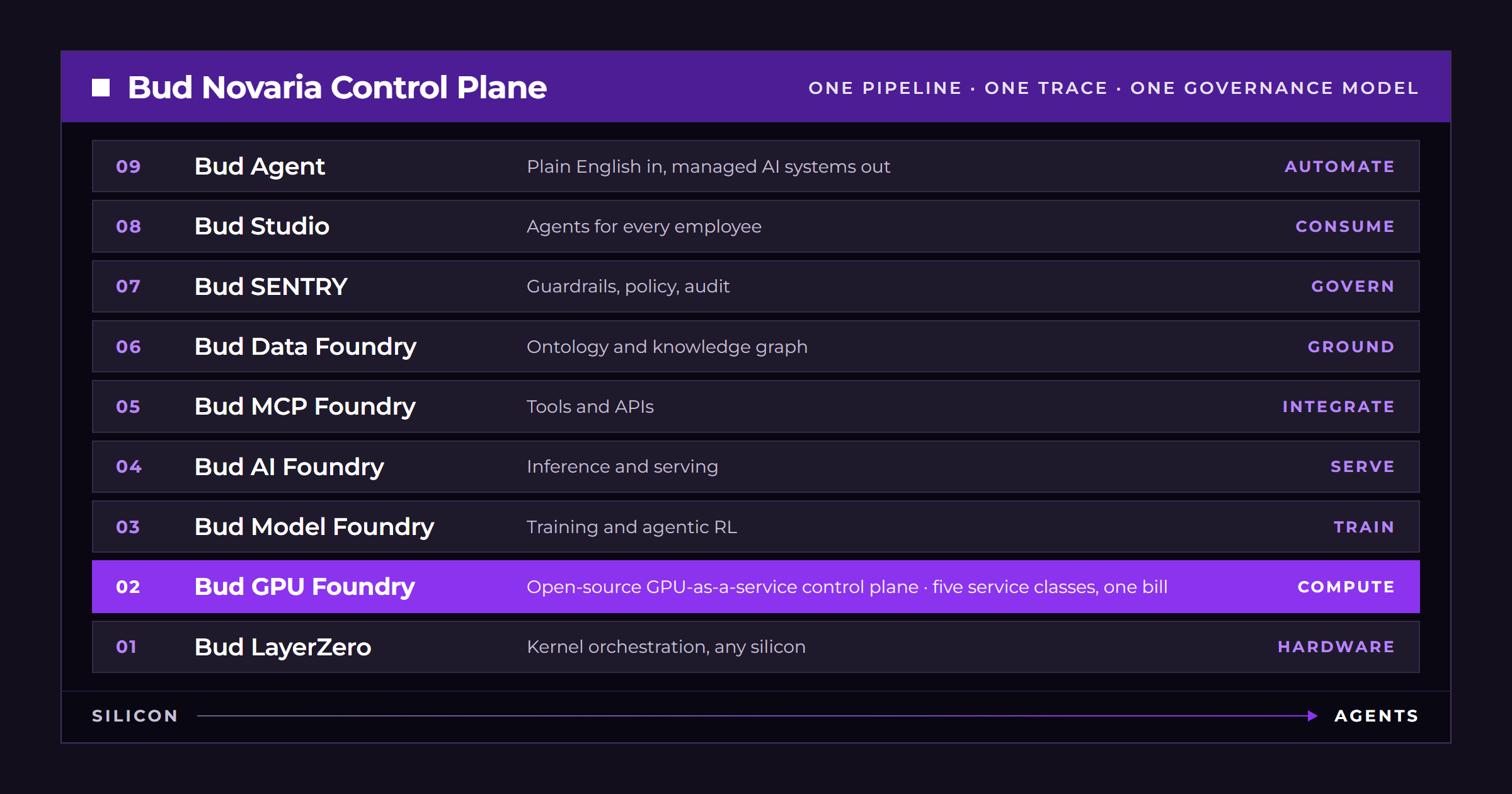
| Layer | Role | Key capabilities |
|---|---|---|
| 09 Bud Agent | Agent creation and orchestration; cross-agent management | Turns plain-English requests into verified cluster operations; runs a self-improving loop that finds model gaps, generates data, post-trains, evaluates and ships updates [10] |
| 08 Bud Studio | Consumption | Chat, copilots and workflows for business users [3] |
| 07 Bud SENTRY | Governance, guardrails and compliance | Six-gate vetting of downloaded models; Bud Sentinel screens every input and output on CPUs at about 0.70 ms p50; 160+ policies, identity-provider RBAC and spend limits; one tamper-evident audit trail [9] |
| 06 Bud Data Foundry | Data, context and knowledge graph | Connects 200+ sources without moving data; organizational ontology with knowledge graph; permission checks before search and on every answer; cited responses [8] |
| 05 Bud MCP Foundry | Tools and system integration | Turns APIs and documentation into governed MCP tools; federates 1,000+ third-party tools; simple connector creation; Smart Discovery sends each query only the tools it needs [7] |
| 04 Bud AI Foundry | Inference serving and unified gateway | Bud Gateway with under 1 ms p99 overhead; Semantic Router across model sizes and hardware tiers; Bud Runtime on CPU, GPU, HPU and NPU; BudSimulator sizing; OpenAI-compatible APIs; scale-to-zero [6] |
| 03 Bud Model Foundry | Training, fine-tuning and distillation | Create SLMs; continual training loop, SFT, preference optimization and RL; pre-flight cost estimates; Bud DiLoCo cuts inter-node traffic 100–500× so training can run over standard Ethernet; registry with lineage [5] |
| 02 Bud GPU Foundry | GPU-as-a-service control plane | Five service classes, four isolation grades, phase-based metering and one bill across a mixed-vendor fleet [2] |
| 01 Bud LayerZero | Kernel orchestration, the AI VM | Selects the fastest attention kernel (FlashAttention, FlashInfer, xFormers, Liger or Torch SDPA) per device and shape on CUDA, ROCm, Intel XPU and CPU; explainable and policy-overridable; Apache 2.0 [4] |
Table 3 — the Bud Novaria AI OS, from silicon to agents. Capabilities are as Bud publishes them for each layer
How a single request travels through the stack
Consider an agent built in Bud Studio that answers a customer-service question. It calls an order-lookup tool exposed through Bud MCP Foundry and retrieves permissioned context from Bud Data Foundry. Bud SENTRY screens the prompt for injection and personal data, then checks identity, policy and budget at admission. Bud AI Foundry’s gateway routes the call to the cheapest model and hardware tier that meets its latency target. That model may have been fine-tuned in Bud Model Foundry on capacity rented from Bud GPU Foundry, and at execution time Bud LayerZero picks the fastest kernel for the device it lands on. Every hop runs under the same tenant, the same quota and the same audit trail.
The commercial link is explicit. Bud AI Foundry runs on Bud GPU Foundry as an ordinary tenant, so customers billed by the token inherit the isolation, quotas and audit trail of the capacity beneath them. Bud GPU Foundry meters capacity, Bud AI Foundry meters tokens, and both roll up through the same account structure. [1] [2] For the first time, an operator can see the true cost and margin of each endpoint, from the GPU-second to the answer.
Three revenue tiers on one foundation
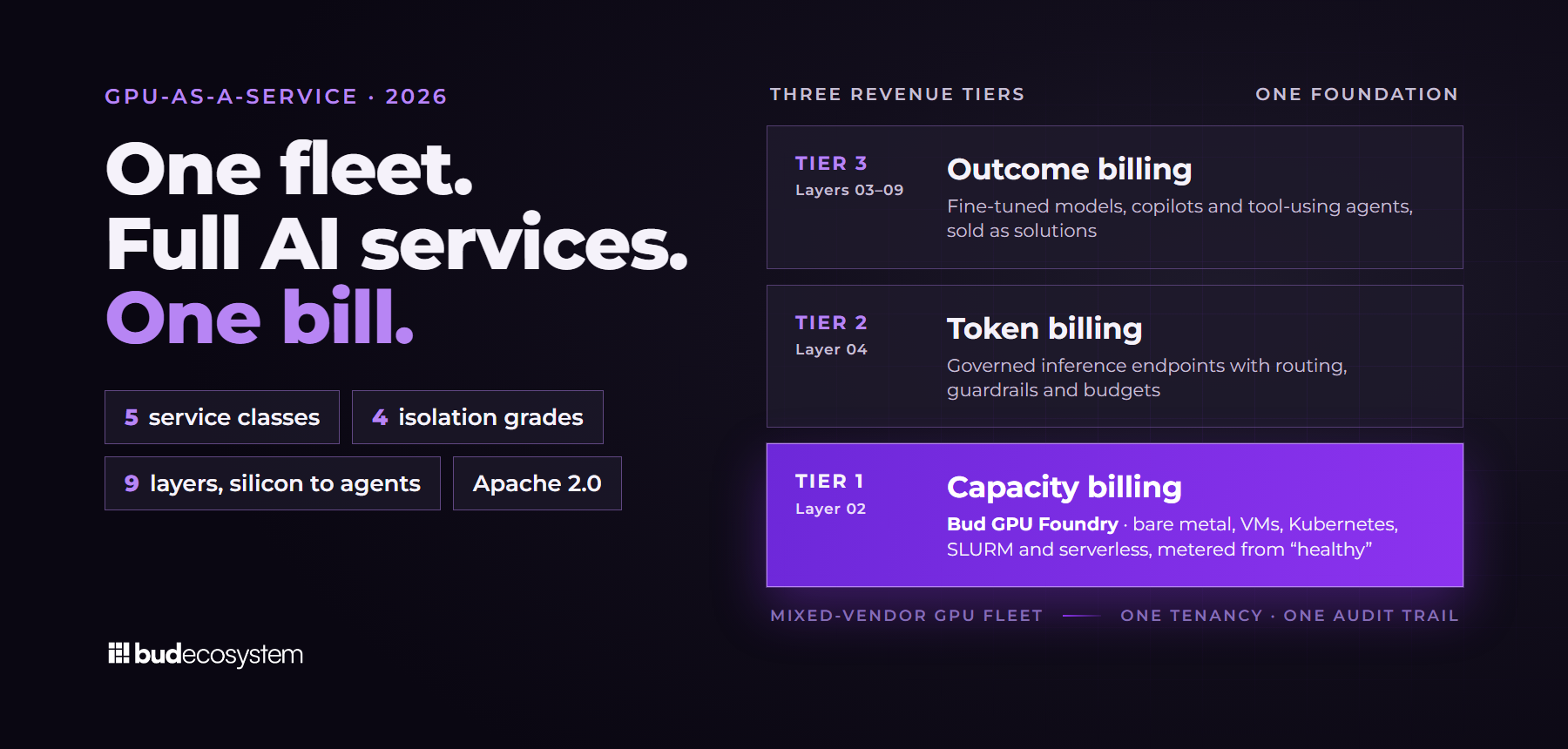
- Bare metal, VMs, Kubernetes, SLURM and serverless, sold by node-hour, allocation-second or GPU-second.
- Governed inference endpoints with routing, guardrails and budgets, sold by consumption.
- Fine-tuned domain models, agent copilots, tool-using agents and governed enterprise AI, sold as solutions.
The Bud Novaria AI OS is designed to cover all three on one tenancy model and one bill, so margin is not handed to a separate vendor at each layer. Because routing and runtime are silicon-neutral, an operator can also reserve its premium GPUs for training and latency-critical work while serving cost-sensitive traffic from other accelerators or CPU tiers.
A walkthrough on your accelerator mix, your tenant model and the services you want to sell above the GPU.
Competitive lens: Bud GPU Foundry and Rafay side by side
| Dimension | Bud GPU Foundry (with the Bud Novaria AI OS) | Rafay Platform |
|---|---|---|
| License | Apache 2.0; open-source release | Proprietary commercial platform |
| Accelerators | NVIDIA, AMD Instinct, Intel, Qualcomm and Huawei in one heterogeneous fleet; others by work order | NVIDIA Ampere/Hopper/Blackwell, AMD MI200/MI300, Intel Gaudi 3; spatial partitioning on MIG-capable NVIDIA only |
| Service classes | Bare metal, VM, Kubernetes, SLURM and serverless in one catalog | Bare metal, VM, Kubernetes, SLURM, developer environments, Run:ai as a managed service |
| Isolation | Four published grades bound to each sellable unit; shared-kernel grades withheld from untrusting tenants | Multi-tenant policy, MIG and time slicing; NVIDIA DSX OS components for hardware isolation |
| Metering and billing | Charge starts at “healthy”; failed starts are zero-cost; separate asked, observed and billed records | GPU and token metering; Token Factory pricing and quotas; Monetize360 revenue operations |
| Above the GPU infrastructure | Training, inference gateway, MCP tools, knowledge graph, guardrails, Studio and agents in one AI OS stack | Token Factory endpoints; NIM and KServe serving; partner ecosystem |
| NVIDIA validation | Pending, Q4 2026 | NVIDIA AI Cloud-Ready; aligned with NVIDIA Cloud Partner reference designs |
| Channel and references | Expanding across GSIs, neoclouds, OEMs, distributors and enterprises | Cisco and Dell routes to market; AI factory operators on six continents |
| Migration | Greenfield today; migration options available | Not applicable |
Table 4 — head-to-head summary. Sources: [2] [3] [13] [14] [16] [17] [20] [27]
Open, auditable code; a mixed-silicon fleet sold from one catalog; isolation and metering rules tied to each unit; and a native path from capacity to models, tools, data, guardrails and agents.
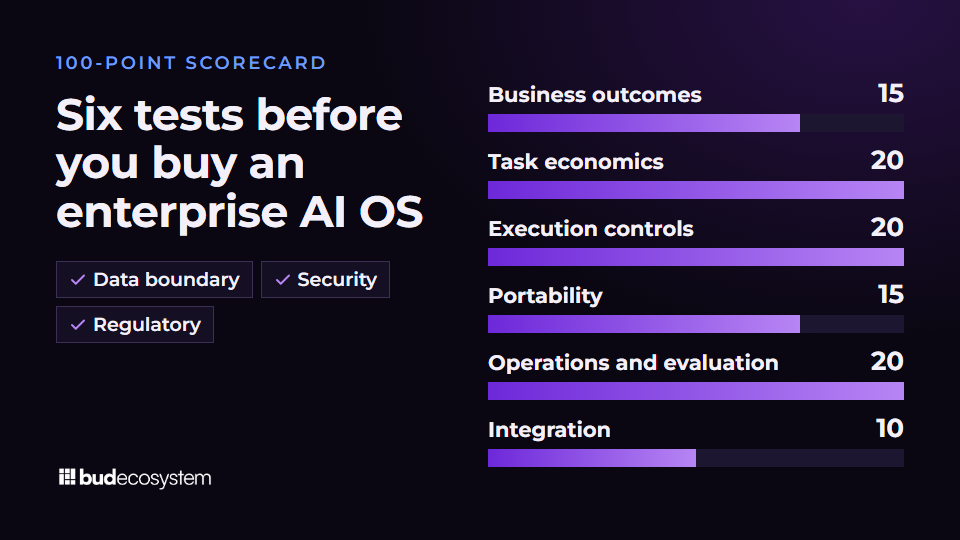
Steps to success
This scorecard is the essential buyer’s checklist:
- Mixed fleet. Register representative NVIDIA and non-NVIDIA capacity. Confirm the exact models, drivers and partition modes, then show how the catalog handles an ineligible request.
- Service classes and placement. Publish at least two service classes and schedule a multi-node job. Inspect placement, topology, queue behavior and the outcome when the job cannot obtain every resource.
- Isolation. Give two tenants different isolation minimums and quotas. Attempt a forbidden allocation and check the denial, the audit record and what each tenant can see.
- Billing integrity. Force a provisioning failure before a workload becomes healthy. Reconcile requested, observed and billable time against the tenant view, the invoice or chargeback export, and the finance system.
- Up the stack. Serve a model endpoint on the allocated capacity, attach guardrails and one tool, and attribute GPU cost and token use to the same customer.
- Day-two operations. Test disconnected operation, an upgrade and a recovery procedure without disrupting either tenant.
This approach still measures utilization and throughput, but it also tests whether the platform can sell a service safely and account for it correctly, and it exposes the integration work an operator would otherwise discover after purchase. Buyers should also inspect the published code, license scope, build process and support terms before treating open source as a settled procurement advantage. [1] [2]
My recommendation
Bud GPU Foundry is the preferred choice within the Bud Novaria AI OS for operators planning a mixed-accelerator estate and a portfolio that extends from raw capacity into models, tokens, agents and outcomes. Its architecture keeps the catalog, isolation, audit and consumption records connected as that portfolio grows, and the rest of the Bud Novaria AI OS stack turns that capacity into higher-margin services without introducing a new vendor at each layer.
The decision should end with evidence. Bud can prove that Bud GPU Foundry integrates GPU management with the services that create the margin advantage, turning scarce capacity into high-margin AI services. Start with the Bud Novaria walk-through, then bring us your fleet. You be the judge.
- Scheduling is now shared infrastructure; the differences are isolation, metering, operations and what you can sell above the GPU.
- Bud GPU Foundry sells five service classes across a mixed-vendor fleet from one catalog, under Apache 2.0, and charges only from “healthy”.
- As layer 02 of the Bud Novaria AI OS, it connects capacity billing to token and outcome billing on one tenancy model and one bill.
Sources: [1] Bud Ecosystem, Bud Ecosystem Launches Bud GPU Foundry (press release), 22 October 2026. [2] Bud Ecosystem, Bud GPU Foundry product page. [3] Bud Ecosystem, Bud Novaria AI OS overview. [4] Bud Ecosystem, Bud LayerZero. [5] Bud Ecosystem, Bud Model Foundry. [6] Bud Ecosystem, Bud AI Foundry. [7] Bud Ecosystem, Bud MCP Foundry. [8] Bud Ecosystem, Bud Data Foundry. [9] Bud Ecosystem, Bud SENTRY. [10] Bud Ecosystem, Bud Agent. [11] NVIDIA, NVIDIA Run:ai Is Now Open Source as Part of NVIDIA DSX AI Factory Platform, 13 October 2026. [12] NVIDIA, NVIDIA Acquires Open-Source Workload Management Provider SchedMD, December 2025. [13] Rafay documentation, GPU PaaS support matrix. [14] Rafay, Token Factory Is Now Generally Available, 2 April 2026. [15] HPCwire, Rafay Systems Introduces Token Factory for Metered AI Model Access, 6 April 2026. [16] Rafay, Elevate AI infrastructure ecosystem expansion (press release), 25 June 2026. [17] Rafay, Rafay and NVIDIA DSX OS, 30 May 2026. [18] Rafay, How GPU Clouds Deliver NVIDIA Run:ai as Self-Service with Rafay GPU PaaS, January 2026. [19] Rafay, Open-source NVIDIA Run:ai as a governed service, 13 October 2026. [20] Rafay, Monetize360 revenue operations integration, 4 June 2026. [21] Verdict, Rafay Systems releases Token Factory, April 2026. [22] Mirantis, Founding ISV partner in the NVIDIA AI Cloud Ready Initiative, 16 March 2026. [23] Data Center Knowledge, IREN Buys Mirantis for $625M, May 2026. [24] vCluster, Neocloud tenant isolation. [25] Sacra, Spectro Cloud company profile. [26] Armada, Five ways Bridge turns GPU clusters into productive infrastructure. [27] Rafay, Cisco Live 2026 (NIM and KServe support). Competitor descriptions are drawn from each vendor’s public materials as of October 2026; Bud capabilities are as published for each layer.
 Kevin Johnson