As generative AI systems evolve from experimental tools to enterprise-grade applications, the balance between performance, cost, and safety has become a defining engineering challenge. Traditional approaches treat these as separate priorities — optimise for speed first, then layer on safety — but the growing complexity of guardrails has made that trade-off unsustainable.
Every safety mechanism, whether a content moderation filter, hallucination detector, or policy compliance classifier, adds friction. Lightweight, rule-based filters might introduce mere milliseconds of delay, but sophisticated LLM-based checks can multiply response times by factors of five or ten. In high-volume enterprise environments, where latency directly affects user experience and throughput, this accumulation of micro-delays becomes a critical performance bottleneck.
What makes this especially urgent is that enterprises can no longer afford to compromise on safety for speed, or vice versa. Regulatory compliance, data privacy, and brand integrity depend on reliable guardrails. Yet users expect AI systems to respond instantly, like a human in conversation. This tension demands a new design paradigm: one where safety and speed co-exist through smart orchestration.
At Bud, our Guardrails team is actively tackling this. We have launched a focused research initiative to explore how far we can minimise guardrail-induced latency without compromising safety or accuracy. Early results have been remarkable — our guardrail systems can bring the added latency from safety checks down to nearly zero, enabling seamless AI responses even under stringent compliance and moderation layers.
In this article we examine the key challenges with current guardrail systems, and how various guardrails affect end-to-end latency, drawing on industry benchmarks and studies. We also highlight best practices for balancing robust safety with real-time performance.
The problems with today's guardrail systems
Despite impressive progress in AI safety tooling, today's state-of-the-art guardrail systems are not yet ready for enterprise production-scale generative AI. Beneath the benchmarks lie a series of fundamental limitations — scalability, infrastructure cost, and fragmented coverage.
Good on paper, not in production
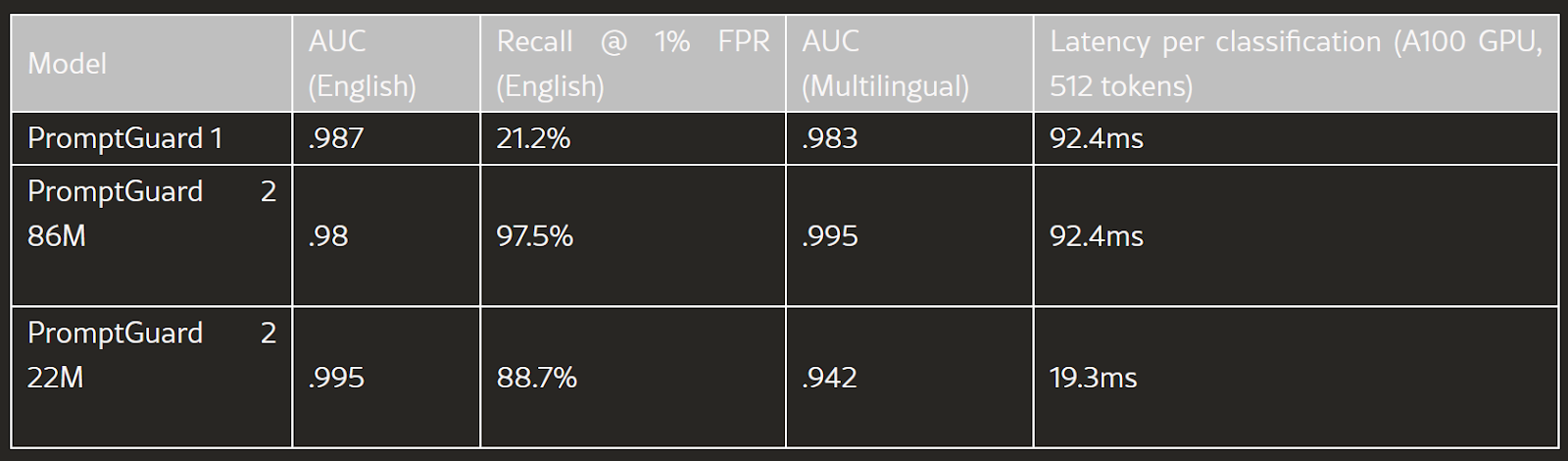
Many leading guardrail systems boast impressive numbers. They often report sub-100 millisecond latency and state-of-the-art accuracy for classification tasks like jailbreak detection or toxicity filtering.
However, these reported benchmarks are typically based on limited input context lengths, usually around 512 tokens. In real-world enterprise environments, GenAI applications regularly process 4K to 8K tokens or more — a 16× increase in input size compared to benchmark conditions. This creates a serious scalability gap:
- Guardrail models with 512-token limits cannot handle long-form inputs natively.
- To work around this, systems must chunk the input into smaller pieces and perform recursive evaluations, multiplying both latency and inference cost.
- Some systems instead trim input text to fit the 512-token limit — a shortcut that leads to context loss and false negatives, especially when unsafe content appears later in the input.
In short, the latency and accuracy figures that look great in papers fall apart when faced with production-scale workloads and real-time service-level objectives.
Guardrails eat your infrastructure budget
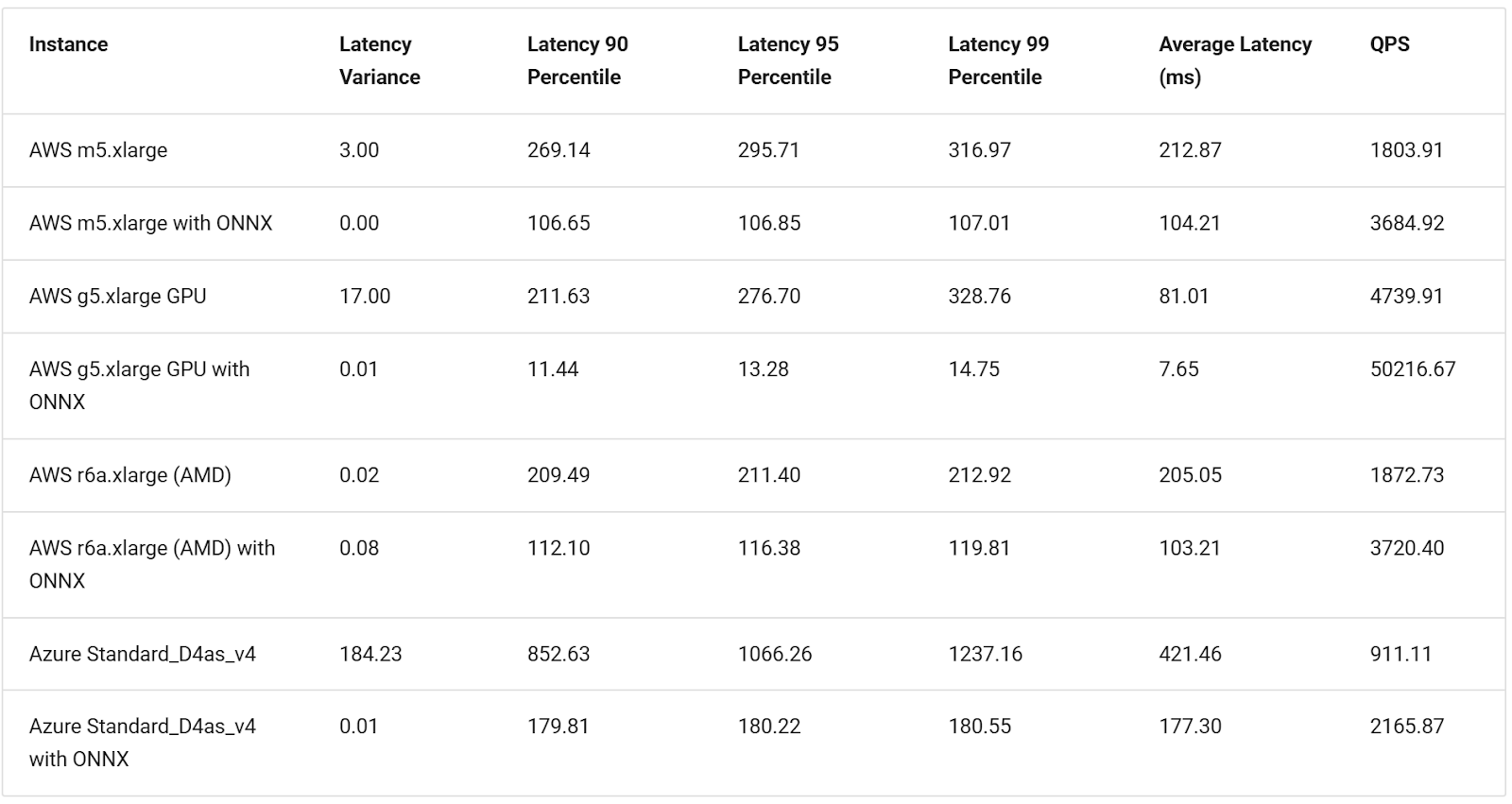
Guardrails are designed to protect, but they come at a price. To maintain low latency and meet concurrency requirements, current guardrail systems must often run on dedicated GPUs. That means two separate high-performance infrastructures: one for the core model and another for the guardrail system itself. Even though guardrails do not require the same compute intensity as large models, they still demand GPU-class resources to stay under 100 ms.
GPU-based deployments significantly raise operational costs — sometimes consuming 25 to 50% of the total LLM infrastructure budget just to keep guardrails running. And to bring guardrail-induced latency to a minimal level, the guardrail infrastructure cost can match or exceed the application's own model deployment.
While it might seem tempting to shift guardrail workloads to CPU infrastructure to save cost, in practice this quickly breaks down. With current guardrails, CPU-based deployments cannot sustain production-level concurrency or response times, making them impractical for real-time applications despite the apparent cost advantage. Teams are forced to compromise: pay heavily for safety, or settle for slow, less secure systems.
No unified framework for all risks
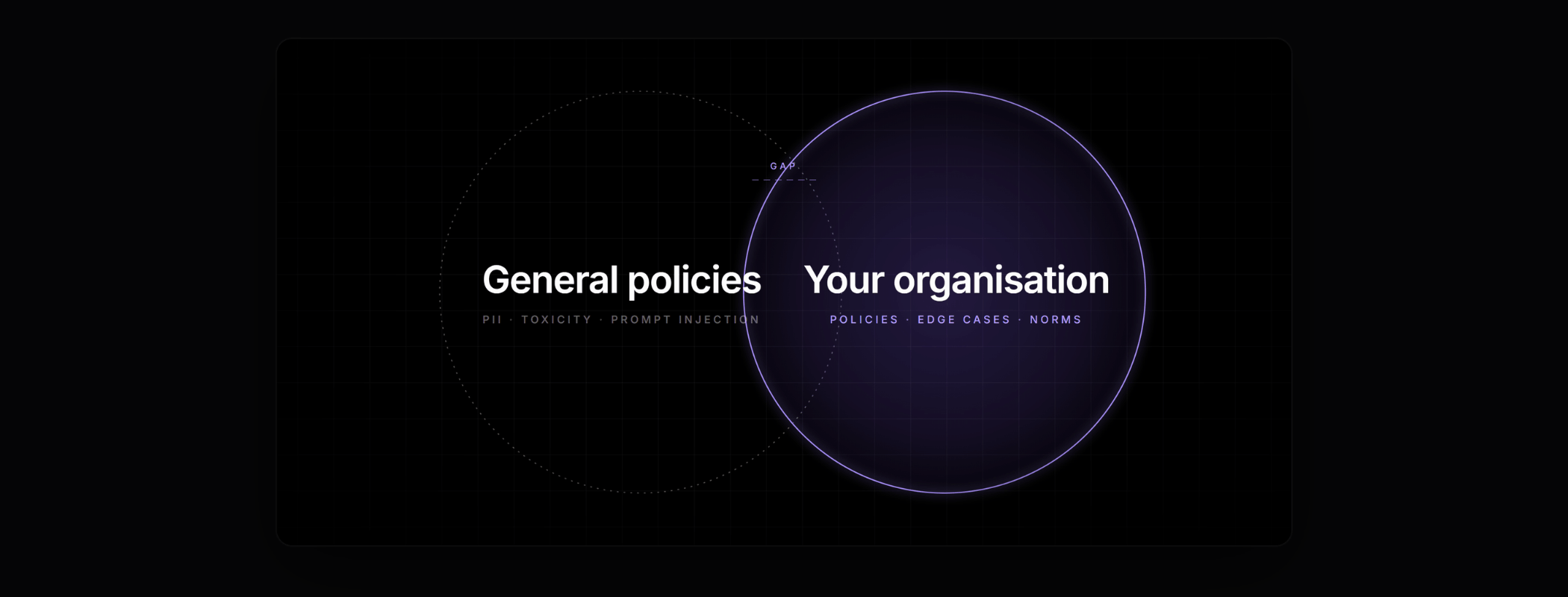
While leading guardrail models achieve strong results in specific domains, none offer comprehensive coverage across the full safety spectrum. Each model or framework tends to specialise:
- Some are trained for jailbreak or prompt injection detection.
- Others focus on toxicity, hate speech, or profanity.
- A few handle code safety or PII leakage.
This fragmentation forces developers to stitch together multiple guardrail systems or rely on plugin-based architectures, which increases technical complexity, latency, and cost.
The more guardrails, the more latency
Each safeguard introduces trade-offs in speed, cost, and flexibility. Simple rule-based filters may add only milliseconds; advanced LLM-powered checks or human moderation can stretch response times to seconds or even minutes. As enterprises layer multiple safety mechanisms together, these small costs compound.
Content moderation filters
These guardrails check user inputs or AI outputs for disallowed content, implemented via rule-based filters or ML classifiers. They act as a bouncer, blocking or altering prompts and responses that violate policy — critical in enterprise use cases to enforce compliance and prevent toxic or sensitive data leaks.
Simple moderation filters tend to be fast. Rule-based keyword filters operate near-instantly. Classifier-based filters add a modest delay, often on the order of tens of milliseconds per request; published work has found open-source and API-based content classifiers running in under 0.1 seconds per input, with lightweight models achieving sub-100 ms by trading off some accuracy.
However, using a large model as a moderator incurs substantially higher latency. Such LLM-powered guardrails have been measured at 5 to 10× slower than classifier-based approaches. In one benchmark, chain-of-thought reasoning with a powerful model pushed moderation time up to 8.6 seconds. Another evaluation noted fine-tuned LLM moderators achieving nearly perfect safety recall at 7 to 8+ seconds per response — clearly unsuitable for real-time use.
Hallucination detection
Hallucinations are plausible-sounding but incorrect outputs. Guardrails here aim to verify responses against trusted data, through retrieval-augmented generation or post-generation fact-checkers. If a hallucination is detected, the system may refuse the answer, correct it, or escalate to a human.
Ensuring factual correctness requires additional steps that noticeably increase latency. Retrieval adds a step before generation — anywhere from a few milliseconds for an in-memory or vector lookup to a few hundred milliseconds when calling an external search API. It also increases prompt length by injecting documents, which slows generation. Post-generation fact-checking adds further overhead, and agentic verification workflows compound it.
In concrete terms, a hallucination guardrail might double the response time: a model that normally responds in one second might take two if it first queries a knowledge base and then verifies the answer. More intensive approaches — cross-checking every fact, or running multiple votes for self-consistency — multiply latency further. Human escalation introduces the most extreme delay, effectively halting the session.
Safety classifiers and policy compliance
These are automated classifiers ensuring output adheres to broader safety and usage policies beyond simple content filters — prompt-injection detection, PII scrubbing, subtle compliance issues that content filters miss.
If using a small classifier model, each additional check might add roughly 10 to 50 ms. Running multiple classifiers in sequence sums these delays; four classifiers at 50 ms each is 200 ms added. To mitigate this, classifiers can often run in parallel threads, so total overhead approaches the slowest single classifier rather than the sum. Industry practice recommends sending every model output through parallel safety checks and keeping combined post-processing under about 50 ms.
Bias mitigation mechanisms
Guardrails to reduce biased or toxic language typically involve minor additional processing. Some implementations simply insert extra instructions into the prompt, which increases token count and hence latency. Large prompt-based policies degrade performance if overused: enumerating many guardrail instructions can require 200 to 300 extra tokens per request, slowing generation and raising inference cost by multiples.
A more efficient approach is a lightweight bias checker on the output — a regex or small model that flags certain terms, costing a few milliseconds. If a bias is flagged and mitigation applied, that could add another model call. In general, bias mitigation either negligibly impacts latency or introduces a small delay when it actively intervenes.
Human-in-the-loop moderation
For high-stakes applications, humans may review outputs flagged by automated guardrails. This is inherently slow relative to machine speeds: studies of content moderation note human reviewers spend roughly 10 to 30 seconds per item. Relying on a person for in-line approval will break any real-time interaction.
Human-in-the-loop is therefore usually reserved for offline review or for very high-risk queries where the session can be paused. In most cases a better design is human-on-the-loop: the AI responds immediately under automated guardrails, and a human later reviews logs or is alerted to incidents. The latency impact of human guardrails is orders of magnitude larger than automated checks, so they must be applied sparingly and strategically.
Other guardrails
Depending on context, additional guardrails include format validation, robustness checks for adversarial or malformed inputs, and compliance logging. Each layer adds to the end-to-end latency of the application.
What the benchmarks actually show
Both academic research and industry case studies highlight the trade-off between guardrail thoroughness and system speed.
- Small classifiers versus LLM evaluators. A comprehensive benchmark of content moderation guardrails quantified the latency overhead of each approach. Small classifier-based guardrails operate in the tens of milliseconds; more sophisticated LLM evaluators incur multi-second delays. A simple classifier or a hosted content filter could evaluate a prompt in around 0.05 seconds, while an LLM reasoning-based moderator took 5 to 10× longer, reaching 7 to 8.6 seconds on the same tasks.
- Static versus dynamic guardrails. A deterministic rule engine adds virtually no latency but is brittle, whereas an LLM-based classifier gate is more flexible but adds an inference call. Programmable runtimes with dialogue management offer powerful control at the cost of running a policy engine alongside the model — published research has noted that enabling robust guardrails can triple the latency of a standard LLM service if done naively.
- Async moderation as a workaround. Hosted moderation endpoints are generally fast, and the recommended pattern is to run the moderation call in parallel with generation so any added wait is hidden. The only latency cost is when moderation flags something — in which case the main model's work is wasted. That design pattern exists precisely because serial latency is unacceptable.
- Tiering rather than replacing. Work on using frontier models for content moderation found them more accurate but slower than older ML systems, taking a few seconds per item where legacy models or heuristic filters were much faster. The conclusion was that LLMs should augment, not replace, fast traditional filters — reserve the slow method for the tough, context-dependent minority.
- Case-by-case invocation. Agent-orchestrated guardrails gain flexibility in handling hallucinations but explicitly increase latency. Invoking the full gauntlet only on low-confidence cases preserves the experience for most answers — a form of graceful degradation where only the uncertain queries slow down.
Stronger safety and accuracy often come at the cost of speed and user experience. Guardrails can introduce anything from a few milliseconds to multiple seconds, depending entirely on how they are implemented.
A 30-minute walkthrough on your hardware mix, governance constraints, and top use case.
Best practices for low-latency guardrails
Achieving both safety and speed requires careful architecture and tuning.
- Parallelise and pipeline checks. Do not run guardrail checks sequentially after the main model call. Launch content moderation asynchronously alongside generation; if generation finishes and moderation has flagged nothing, return immediately. Run multiple post-generation classifiers concurrently on the output text. This keeps the main thread flowing and avoids making the user wait on back-to-back checks.
- Use lightweight models and heuristics first. Implement a tiered strategy: fast filters catch obvious issues, and heavier checks are reserved for the trickiest cases. Simple regex or keyword filters instantly reject inputs containing disallowed phrases at zero latency. A small classifier handles the majority of content filtering under 50 to 100 ms. Only when these are inconclusive should the system fall back to an LLM-based evaluation.
- Minimise prompt bloat. Avoid packing exhaustive policy text into every prompt — more tokens means higher latency. Adding a 250-token policy paragraph to each request increases both cost and latency significantly. Keep system prompts concise and offload detailed enforcement to side-channel checks; if you must inject policy, insert only the rules relevant to that query.
- Cache and reuse. If a classifier has already seen a particular response and deemed it safe, reuse the result rather than re-running it. Common safe outputs like generic greetings can be whitelisted to bypass heavy checks. Caching is tricky for generative AI since every response is unique, but partial reuse is worth considering under high load.
- Set smart thresholds. A very strict guardrail that flags borderline content sends many items down slower paths for little gain. Risk-based thresholding ensures guardrails do not over-fire. A medical advice bot will have low tolerance for error and accept more latency; a casual chatbot might tolerate minor inaccuracies to stay real-time.
- Roll out gradually and shadow test. Deploy new guardrails in shadow mode first — the guardrail runs and logs its decisions but does not block or alter outputs. This measures how often it would trigger and how much latency it would add before it goes live. Use feature flags so you can disable or tweak quickly.
- Keep human oversight off the critical path. Humans should review a sample of outputs, handle appeals, and label data to improve models — all in parallel or post hoc. If a human must gate a real-time response, be transparent that responses will be delayed, and apply it only to a tiny subset of interactions.
- Monitor and optimise. Track the latency introduced by each guardrail component. If a layer becomes a bottleneck, optimise it — a faster model version, a service moved closer, a simplified rule set. Monitoring also catches when guardrails fail open or fail closed. Continuous performance testing of the guardrail pipeline under realistic conditions is key.
Conclusion
Adding guardrails to GenAI deployments is not optional in enterprises — it is essential for safety, compliance, and trust. However, every guardrail introduces a trade-off. Well-designed guardrails need not sink performance. With a thoughtful architecture, enterprise GenAI deployments can remain both safe and responsive.
The best implementations of guardrails are almost invisible to the end user. They work behind the scenes in milliseconds, until the rare moment they must intervene.
- Published guardrail latency is measured at 512 tokens; production runs at 4K–8K, a 16× gap.
- Keeping guardrails under 100 ms today means GPU-class infrastructure, at 25–50% of the LLM budget.
- No single framework covers the full risk spectrum, so teams stitch several together and pay for each.
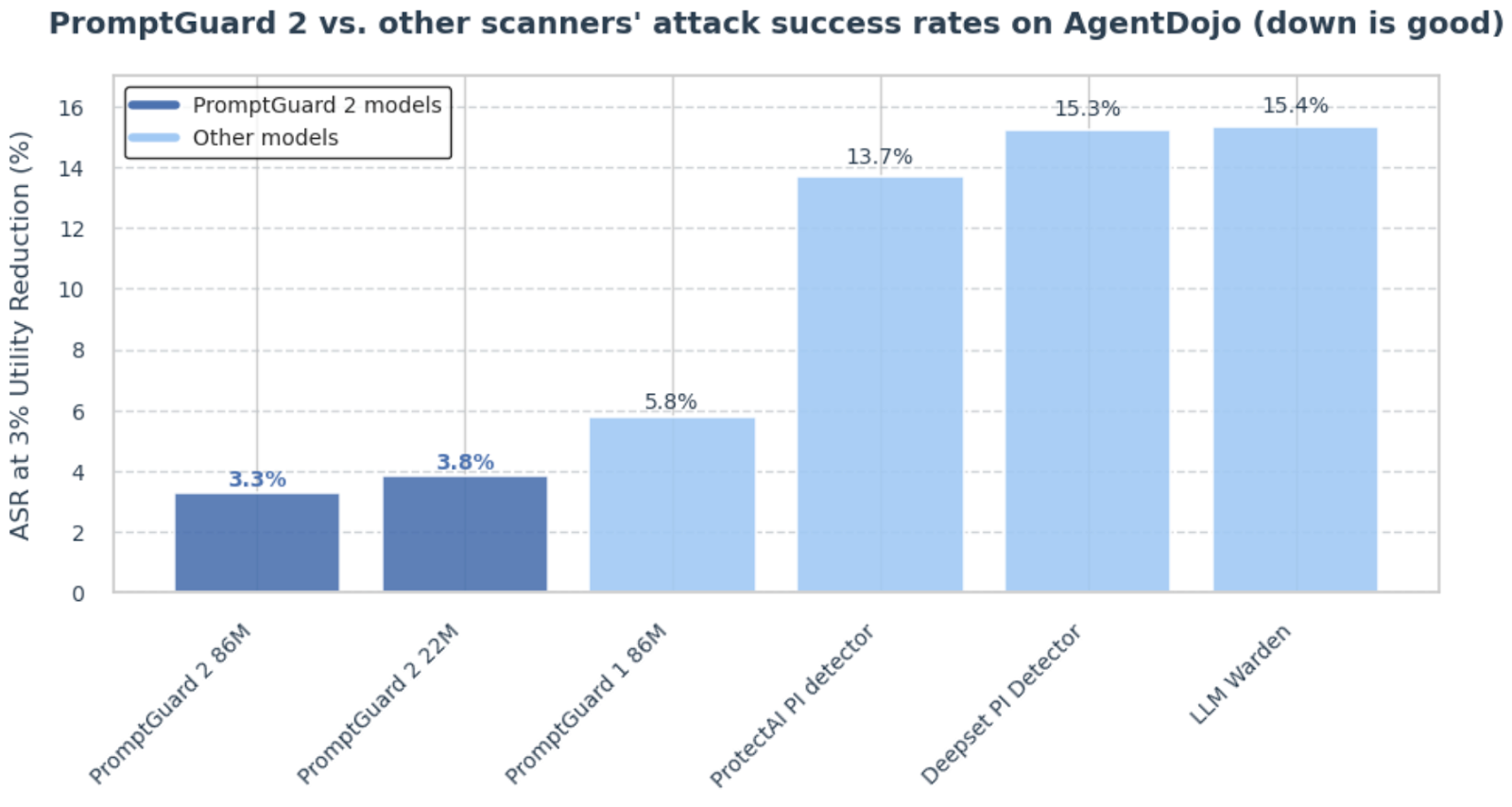
Latency figures, attack success rates and infrastructure comparisons in the figures are third-party benchmark results measured under the conditions stated in each chart — principally a 512-token input on an A100 — and are reproduced to illustrate the benchmark-versus-production gap, not as Bud measurements. Budget share (25–50%) and the latency ranges quoted per guardrail type are indicative industry ranges, not a controlled study. This is Part 1 of a series; the near-zero-latency results referenced in the introduction are described in later parts.